Are you Schiaparelli’s robot baby?
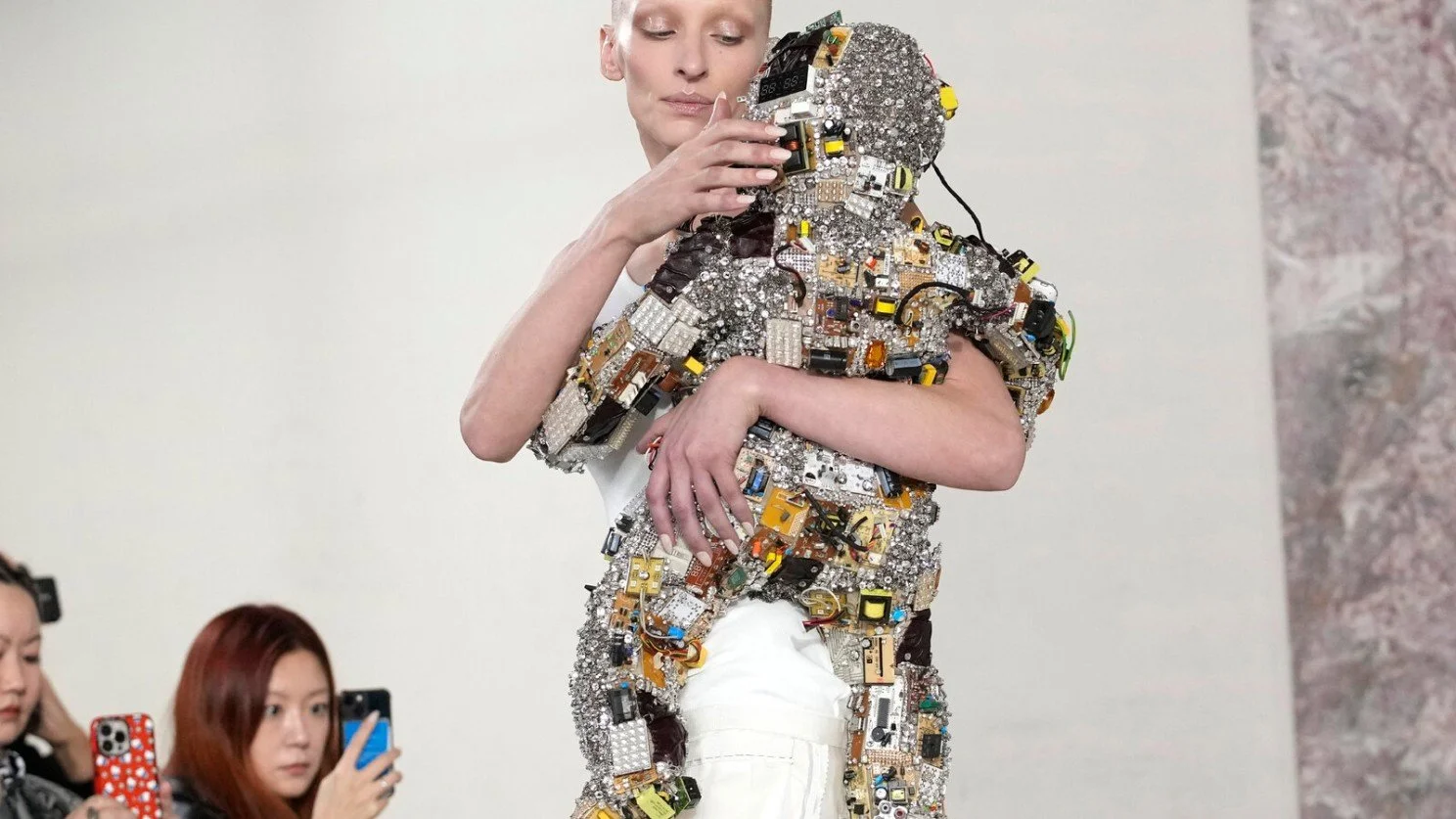
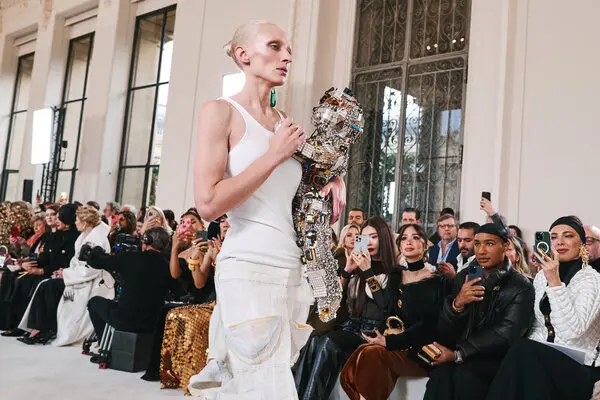
You don't expect to see robot babies at fashion shows. So when Schiaparelli sent a techno-doll down the runway as part of its spring 2024 couture collection, the accessory provoked serious reflection—rumination that feels relevant still today. As described by Deputy Digital Director Renan Botelho in his review for WWD¹:
The bionic doll was embroidered with Swarovski crystals, old batteries, electronic chips, flip phones and more electronic waste from the pre-iPhone era.
Speaking to the spark behind the idea, Daniel Roseberry told WWD that the figure was inspired by the Alien movies². Unable to control the increasing volume of virtual counterfeits of his material collections, the creative director returned to his memories. There he found a hive rich with remembrances of "prehistoric" devices dating to pre-2007. Taking fragments of tech waste from times gone—dipped in Alien vibes—the infamous infant was born.
Carried (not worn) down the runway by model Maggie Maurer, the accessory (of sorts) understandably caused a social media flurry. Six months later, robot baby's fame grew further when it was "adopted" by a fashion influencer. No, I'm not kidding. As reported by Digital Managing Editor Clare McInerney for Vogue Scandinavia³:
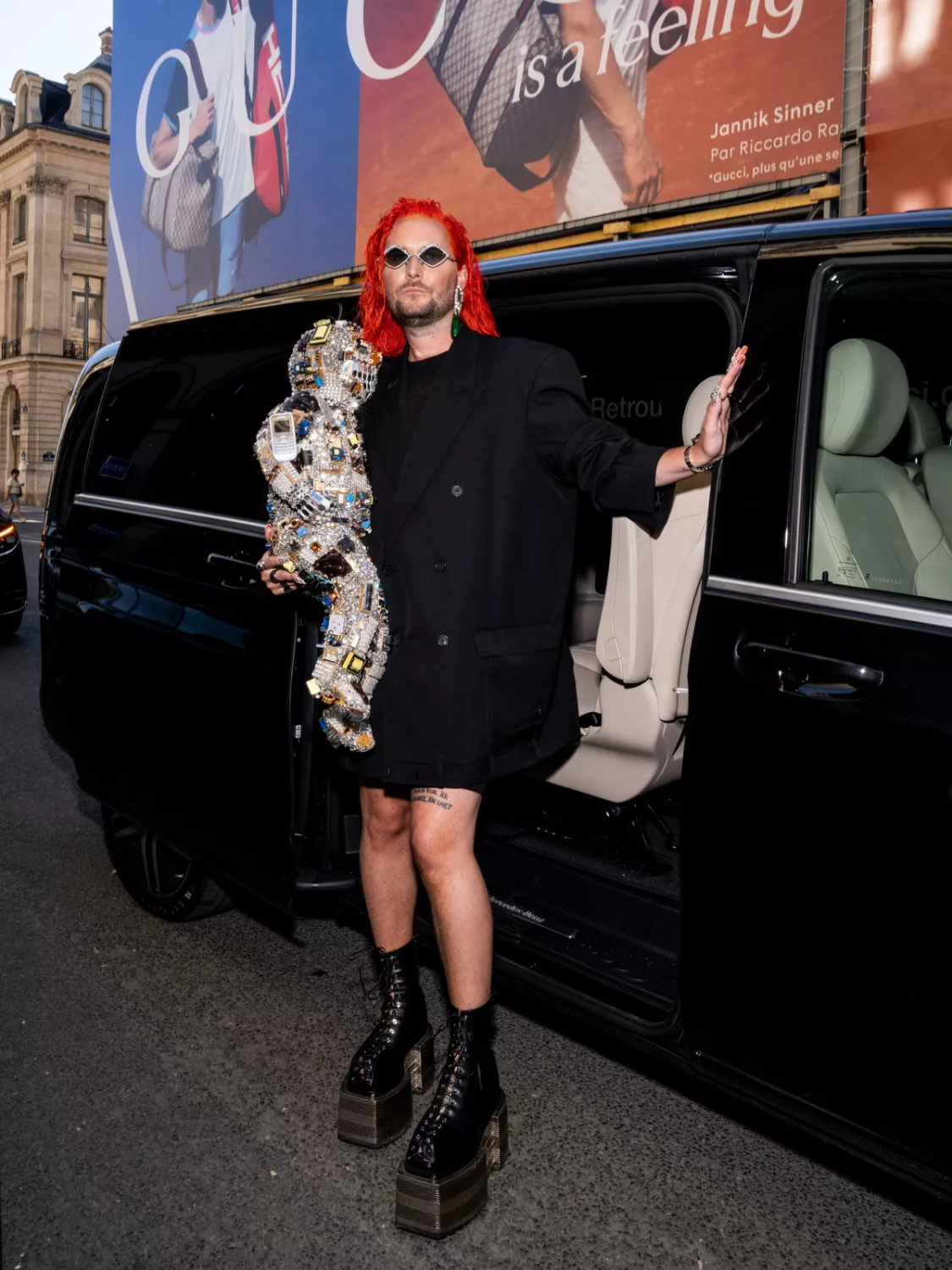
Congratulations are in order for Swedish style icon Fredrik Robertsson, who has made his official debut at Paris Haute Couture Week as a fashionable father.
The new addition to his sartorial family is a giant bedazzled robot baby – encrusted with circuit boards, gadgets, wires, and thousands of shimmering Swarovski crystals – as originally carried by model Maggie Maurer down … Schiaparelli Couture runway.
But what does all this mean? And should you care? Maybe not. But robot baby does give us an excuse to examine what it means to be so entangled by technology. If you look at the infant long enough, it's kind of hard to not. Here's some things Schiaparelli's accessory invites us to consider (if you want).
Nobody puts your inner bedazzled robot baby in the corner
"While artificial intelligence is changing industries at an unprecedented pace," journalist Seb Murray writes⁴, "it also threatens job security, raises questions about fairness, and could deepen inequality." As Murray made clear in a recent piece for MIT Sloan Management Review, technology is reshaping relationships between employers, workers, and labor organisations (to a degree not seen for many decades).
Tech deployment is nothing new; machines have been doing manual labour for a long time. The novel layer is that we're now told tech can "think" well enough to do our jobs for us. Once upon a time, any competition at work was felt between human candidates, now the threat is disembodied bots. In a world where technologies are touted as the smarter and most efficient option, humans are increasingly categorised at the less capable option.
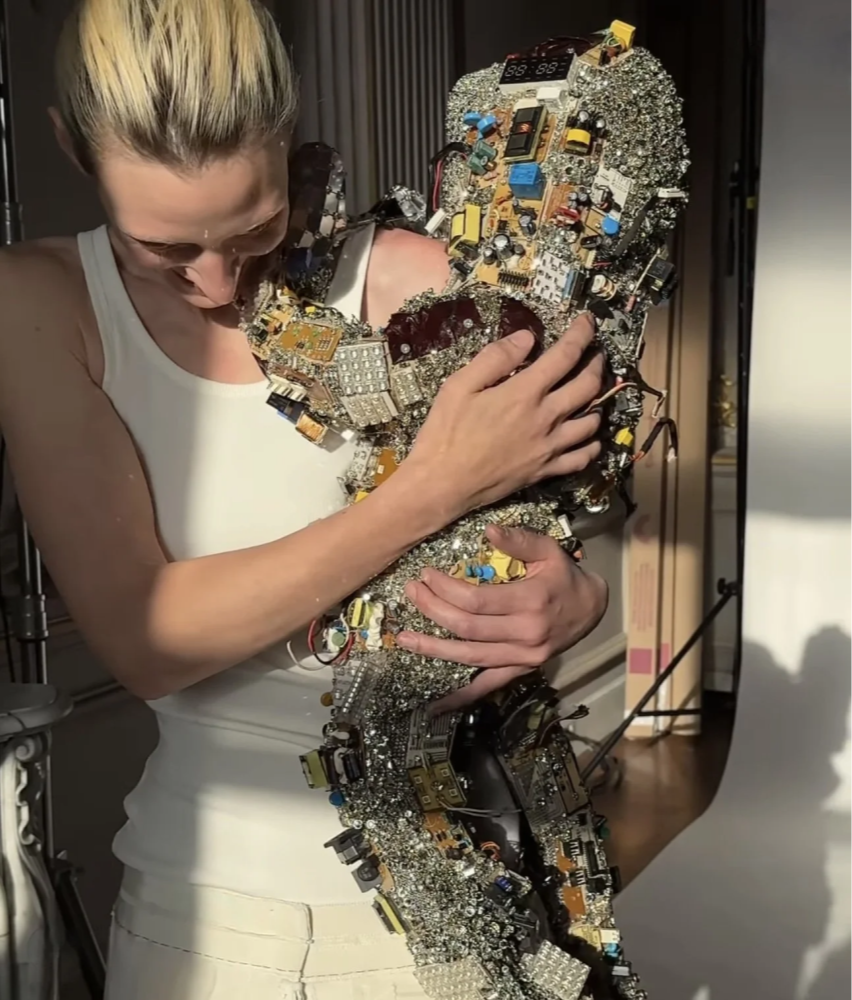
Robot baby reminds us that even in a world being seemingly rewired without our say, our humanity still shines bright as Swarovski crystals. Its flesh may have been made of the synthetic shrapnel of hardware, but its infant shape symbolised birth—the inevitability of new life and the strength of human spirit. Never forget: nobody has the right to put your inner bedazzled robot baby in the corner.
Our need to be nurtured cannot be negated
Robot baby's enchantment was amplified by the choreography of its debut. Maggie Maurer did not simply carry the accessory, she cradled it gently. The techno-doll was not toted but nursed, just as a newborn baby would be held by a mother weaving through a crowd.
When Fredrik Robertsson took robot baby to fashion week as his plus one, he held the child in a similar way. These maternal and paternal gestures may not have been planned, but they do symbolise our seemingly inherent need to nurture (and to be nurtured in return).
In our tech-infused terrain, robot baby—bizarre as it seems—reminds us of what it means to be human. Technology alone is never enough; we need care, tenderness and touch.
We're all the life models of the machines
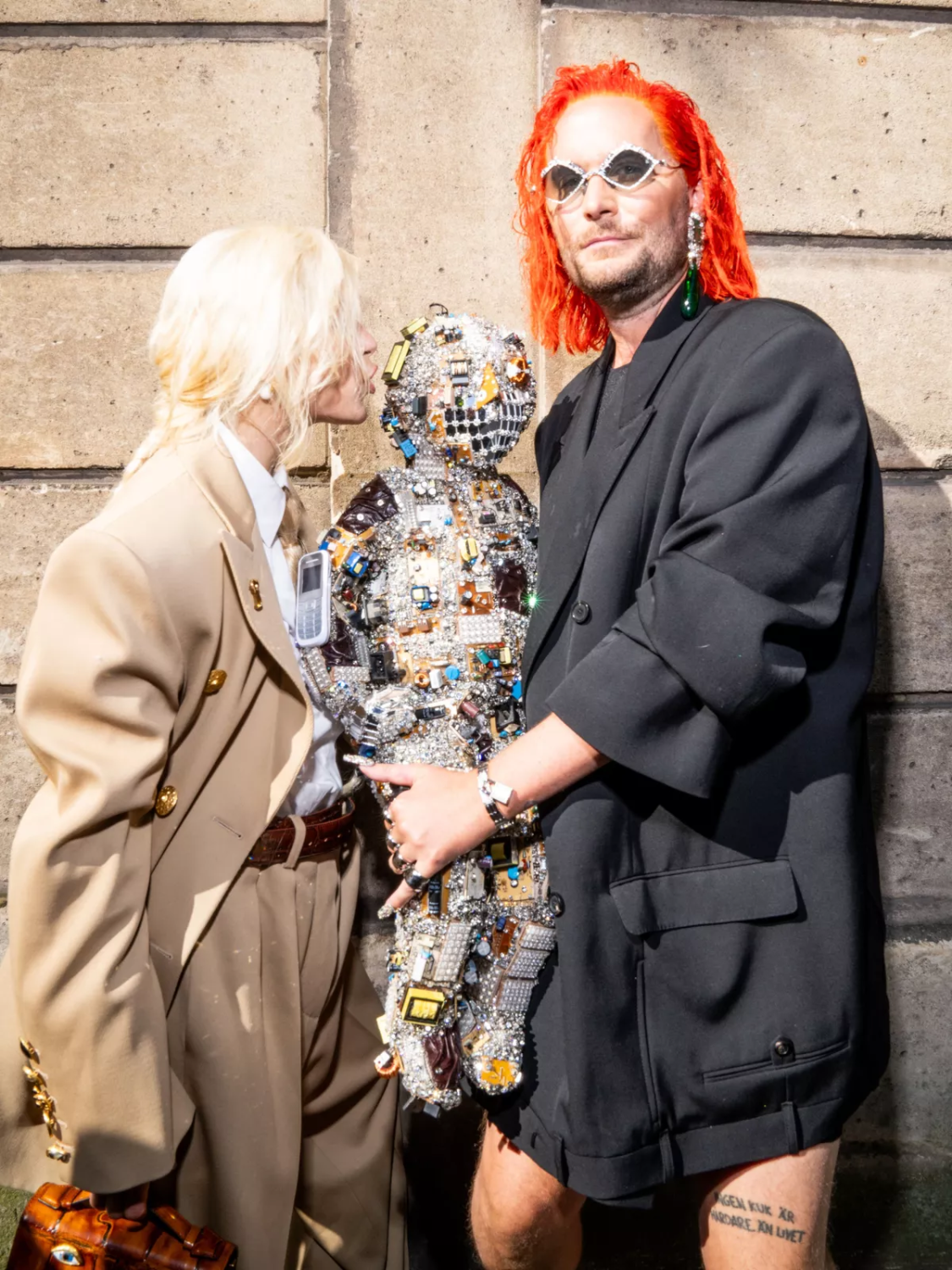
Image by Vanessa Tryde. Courtesy of Vogue Scandinavia.
God created mankind in his own image, so they say⁵. As an agnostic, I'm no expert, but for some reason robot baby reminds me of this snippet of scripture. Like many early roboticists, Roseberry modelled his figure in human form. It's a plain observation, but one worth noting.
"At its core, the humanoid robot reflects our self-image," Alan Burden writes⁶. On a practical level, Burden believes that the goals of humanoids built today reveal our priorities. The now iconic robot baby may not reveal precedences in quite the same way, but it does remind us that there can be no technological equivalent of humanity without humanity itself.
As God created us in his own image, technologists are arguably creating new tools in an attempt to replicate who we already are. Beneath its circuit boards, crystals and wires, robot baby is still built in the shape of human. Without an original, there can be no counterfeit.
Little robot baby leads us to big thinking
Schiaparelli's techno-doll was met with both love and loathing. "Some people called it a creative masterpiece," Republic World reported⁷, "while others called it creepy, disturbing ... going as far as calling it AI propaganda."
Whether you're a lover or a loather, robot baby invites us to philosophise about rising tensions between tech and human beings, and that's a good thing. As artist and scholar Eryk Salvaggio reminds us⁸: machines cannot feel or think, but humans can, and ought to.
We can all make statements as bedazzling as robot baby's body.
Want more?
Contact me if you want to collaborate.
Compose a lettre if you want to make art.
-
Schiaparelli’s Robot Baby and More Viral Tech Moments on Runways Through the Years by Renan Botelho via WWD
Robot Baby Schiaparelli: The Star Of Haute Couture by Jodi Whelan via Fizzy Mag
Fashion daddy: Fredrik Robertsson is with child at Paris Couture Week by Clare McInerney for Vogue Scandinavia
5 issues to consider as AI reshapes work by Seb Murray via MIT Sloan School of Management
What Does It Mean to Be Made in God’s Image? Interview with John Piper—founder and teacher of Desiring God and chancellor of Bethlehem College and Seminary
More Than Machines: Why Do We Want to Build Robots That Look Like Us? by Alan Burden via Australian Cobotics Centre
Creepy, Sick And Disturbing - Netizens Call Schiaparelli’s Robot Baby AI Propaganda by Republic World
Machines Cannot Feel or Think, but Humans Can, and Ought To by Eryk Salvaggio via Tech Policy Press
