You may be part of the AI earthquake

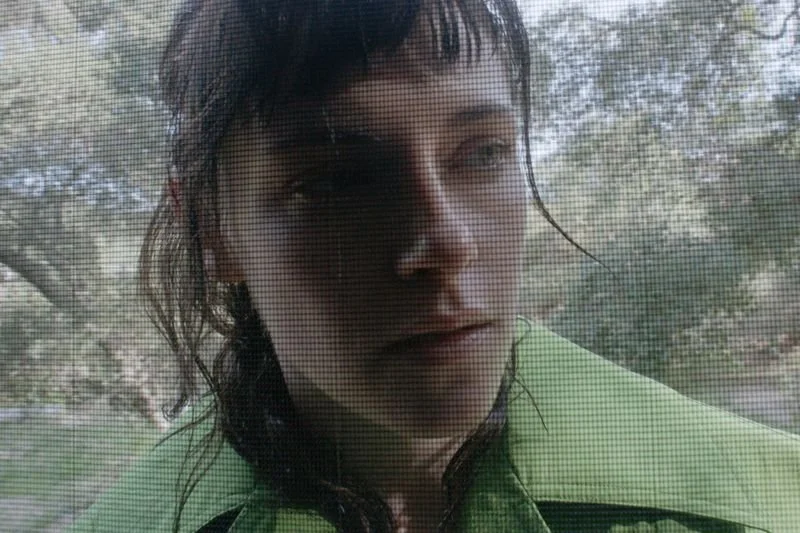
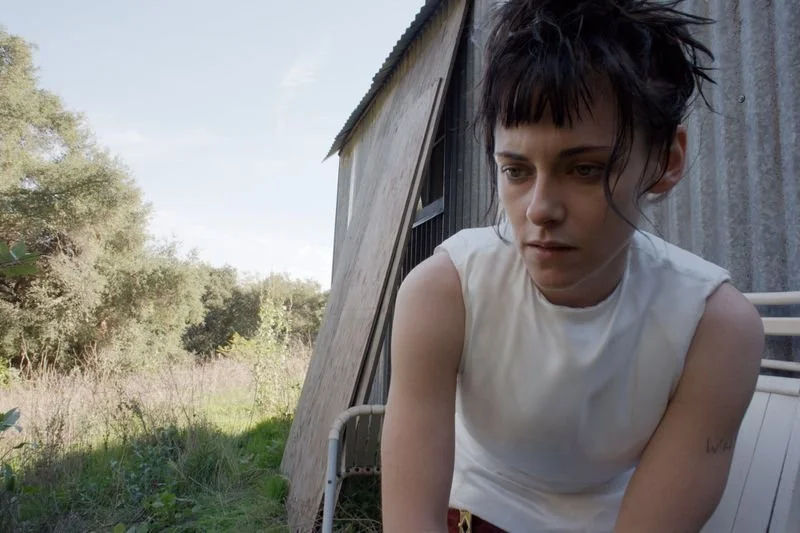
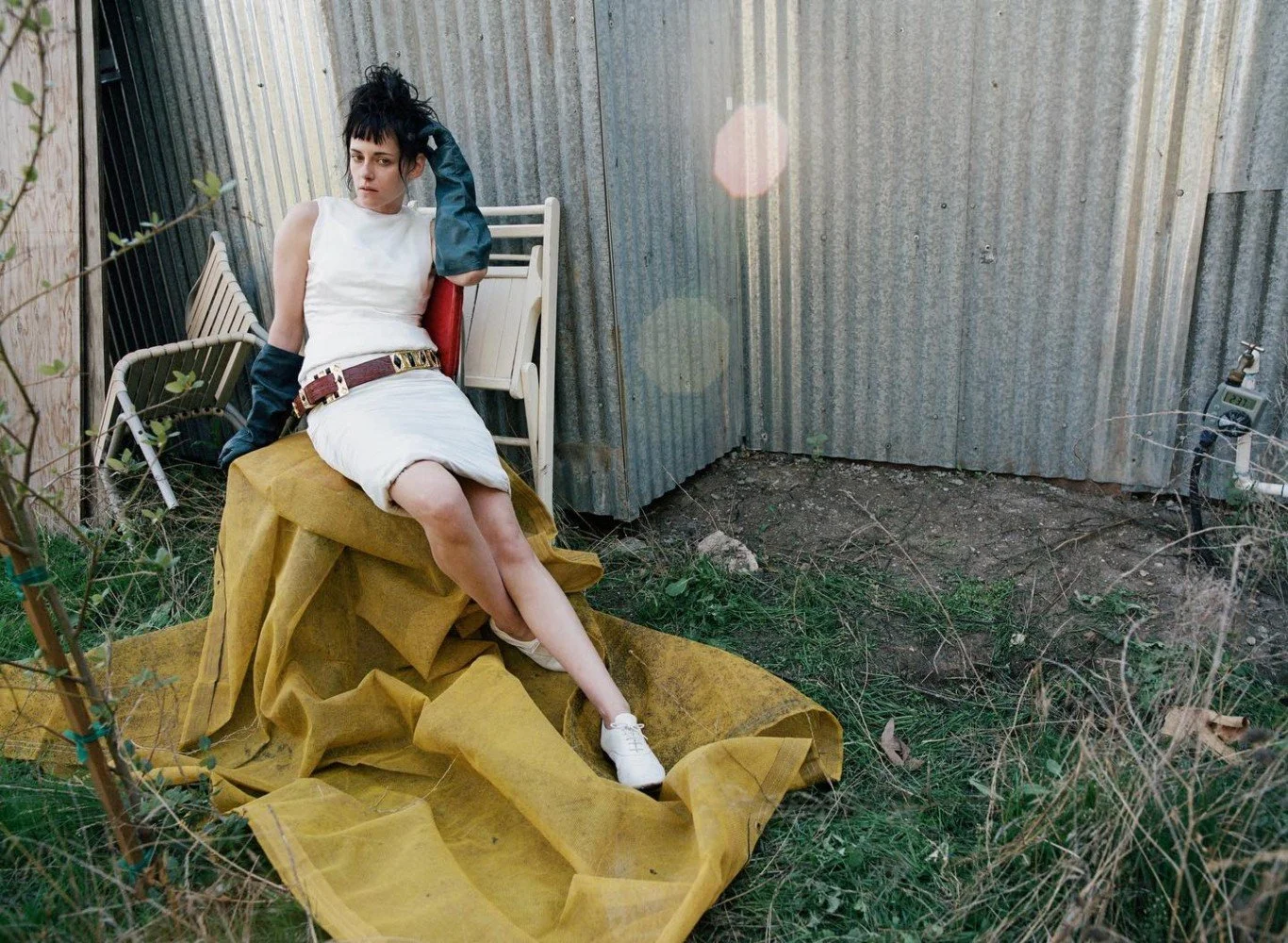
Kristen Stewart by © Zoë Ghertner for MARFA JOURNAL
Seismologists don’t blame earthquakes on spirits, but some myths do attribute temblors to the movements of underground creatures¹. This historical anchor is arbitrary but also necessary. With tech continuing to touch the human experience with largely ungoverned abandon, we’re seeing a burgeoning of backlash from an array of collectives who all share subterraneity in common.
As tectonic plate shifts that contribute to quakes, movements made by AI subalterns are felt as those made by the underground spirits of mythology. Subtle yet strongly seismic, the golden thread of AI subalternity is what philosopher Ismael Kherroubi García describes as a rising tide of initiatives countering predominant AI practices and narratives². Recently, he and I exchanged thoughts on the archetype of the AI subaltern and why the future of technology remains ours for the imagining and taking.
Acknowledge what AI brings to your attention

Kathryn Carter: “The crisis consists precisely in the fact that the old is dying and the new cannot be born; in this interregnum a great variety of morbid symptoms appear,” Antonio Gramsci once wrote³. You could say that the Italian philosopher’s words provide us with a lens of analysis in a world where AI is framed as both panacea and poison. How can Gramsci’s observations of morbid symptoms help us navigate the landscape of polycrisis we find ourselves in today?
Ismael Kherroubi García: I love the quote. I think, two things. First, he is writing during the rise of fascism in Italy and its establishment.
Kathryn: And from prison, too, as additional context.
Ismael: He is writing from prison, [so] I think it’s worth remembering that even if today things feel very dark, we are in a very different world. Another general note is that he calls his era an interregnum, [yet] I think we always feel like we’re in interregnum, I don’t think anyone ever comes into the world and thinks everything’s settled.
Kathryn: Valid point, etymologically the Latin word Gramsci has chosen, interregnum, means⁴ “an interval between two reigns.” History is punctuated by power plays.
Ismael: And to bring Gramsci's quote into the world of AI. Artificial intelligence is ultimately applied machine learning, or just statistics on steroids. It’s just huge data sets and discovering new patterns that are very difficult for us to find as individual humans. That’s a great, powerful thing. But in creating systems that find patterns that are usually hard to see, we’ve brought to the surface systemic biases and injustices in the world. In AI circles, people speak to biases in data sets, but you can just as easily find sociologists or anthropologists who will tell you that they’ve been trying to address these injustices for decades. Racism is a thing, sexism is already here, etc.
Kathryn: Absolutely. In tech circles, historical biases of all varieties are sometimes framed as newly-discovered data problems, but it’s not that simple.
Ismael: They were here before, but AI is making the biases really clear. There now exist facial recognition technologies that work better on lighter skinned males than on darker skinned females, as just one example.
Kathryn: The biases illuminated by AI are our version of Gramsci’s concept of morbid symptoms, maybe?
Ismael: I think so. I don’t know the part of Gramsci’s Prison Notebooks that quote is from, but it seems he feels there is a past we’re trying to phase out and that there’s something positive on the horizon. Right now, however, we’re having to deal with these morbid symptoms. For me, AI just helps identify those morbid symptoms—biases, injustices, etc.
Kathryn: I love your use of the word “help” there. Even though there’s plenty of darkness to focus on right now, the present paradigm is also providing avenues for philosophising on what it means to be human. There’s reason to hope that this climate of chaos could lead to powerful change.
Ismael: After completing my master's degree in the Philosophy of the Social Sciences, which placed a heavy focus on analytic philosophy, I left with a sense of hopelessness, or at least, with the sense that there is no space for hope. The only tools my education gave me were analytical and logical; there is no margin for error. That struck me as the most anti-philosophical thing.
Kathryn: "Hope Was but a timid friend," Emily Brontë once wrote⁵. Perhaps that sense of hopelessness was your cue to seek it elsewhere.
Ismael: It was a weird moment for me. So now I allow myself to read the likes of Gramsci, to look at other philosophical questions. That call for hope is also when my career changed lanes.
Kathryn: I like that, you’ve merged.
Ismael: Right, I’m experienced in AI governance proper, whatever that means, it’s a very institutional approach to coming up with policies. You can work on culture, but people aren’t that interested in culture. So [instead] you devise a policy, put it on the intranet and hope that someone reads it the next day when it comes into force. That’s how people I’ve worked for in the past had me do things. So, I think I’ve become disenchanted. Often, AI governance feels like the reinforcement of what we’re “supposed to” believe about AI. That it’s inevitable, that it’s accelerating, that it’s everywhere.
Kathryn: That it will either save us or lead to our damnation, etc.
Ismael: Yes, so I’ve landed in this place where we need space for hope.
Kathryn: I love that. Since you’ve just touched on the narratives spun for us, we do hear lots of tech hype from people in industry and politics. I say tech as the label of “artificial intelligence” is still one I struggle to understand. But tech as it’s deployed today, without prior consultation, impacts us all. What role can philosophy play in empowering us to become more a part of the conversation?
Ismael: Well, analytic philosophy does give us one thing. Clarity and clear definitions, delineated ideas and concepts, is what philosophy, done well, results in. So, to your point about not understanding the label of AI, well, it’s not actually that obvious. Allowing yourself to figure out why it doesn’t feel right, that is a question of philosophy. We’re very careful with language in philosophy, as a practice it gives us the tools to think accurately about the terms we use. Philosophers need to come up with very slow, careful definitions. In that respect, philosophy pushes us to give things time, which is what we do not have with AI.
Kathryn: If only the rhythm of the world accommodated such meditative practice.
Ismael: That’s the challenge. Philosophy comes with a couple of problems today. On the one hand, we’ve had very influential philosophers and institutions—University of Oxford being one of them—pushing the narratives that we’re challenging in AI. For example, ideas of effective altruism, AI inevitability, godlike AI and super intelligences. Those ideas often emerge from very well funded philosophy departments.
Kathryn: And the individuals associated with such institutions get a lot of air time.
Ismael: A lot of air time. So, we need to remember that philosophy can create space for people to get things wrong. There’s another interesting thing [going on]. Philosophers are now being offered jobs by big tech; that’s pretty impressive for a philosopher—we don’t get many jobs. But often, in such roles, you’re not doing proper philosophy, you’re not reflecting on the nature of everything at hand, you’re being pushed to ask very specific questions that are of interest to the company who has hired you.
Kathryn: I’m reminded of something Sylvia Plath once said: “I believe that one should be able to control and manipulate experiences … with an informed and an intelligent mind.” The late poet was referring to personal experiences⁶, but one could argue that individuals who take what are publicly perceived as “cool” jobs may not be able to control their own philosophising. They must think in alignment with the status quo.
Ismael: That’s an important point to make. AI subalterns often look at philosophers who have taken “cool” big tech jobs and immediately classify philosophy as evil. Trained philosophers then have to defend the practice. The likes of Anthropic, Meta, and OpenAI can co-opt the idea of philosophy. They hire philosophers so that they claim that they’re legitimised by 3000 years of thought. So I think that’s another difficult aspect of philosophy, it can be co-opted.
Believe what you feel not what you’re told

Kathryn: Speaking of big tech, the inevitability of AI is one of the industry’s favourite narratives. But, to the importance of clarity when philosophising, what do we mean by AI inevitability anyway?
Ismael: Yes, what do we mean by that? What is inevitable?
Kathryn: Let me attempt to rephrase. The theory of technocracy refers, broadly speaking, to the control of society by scientists, engineers, etc⁷. In recent years, a few tech leaders have been described as technocrats⁸, unsurprising given the desire to govern based on technocratic principles rather than by governmental policy. Their dream of utopia hooks humans into digital infrastructures by default, meanwhile many of us would rather deeper connection to nature. This is a messy string of thoughts, but the idea that to exist in the future, you’re going to need software to get by … Do you think that’s inevitable?
Ismael: That framing helps, that’s a really powerful way to put it, I really like it. No, it’s not inevitable. The word inevitable sucks out any form of agency from humanity, right? It’s saying “sit down, take a seat, you’re here for the ride.”
Kathryn: Put baby in the corner and block Patrick Swayze’s path to rescue her.
Ismael: Yes, that’s what the word inevitable implies. And I just cannot see it that way. I think we have so much more agency than they—capital They, big tech they—want us to have. I say big tech, but it’s a messy term in itself.
Kathryn: I don’t really like the term either, but it’s the short hand we need sometimes. Speaking of labels, it’s also impossible to apply one label to individuals thinking critically about artificial intelligence. Diverse collectives are focused on varying concerns—from algorithmic models that reinforce societal biases to the unsustainable development of data centres. Your article 'Research in the Wild: Subalternity in AI’ poses the question⁹: what if we all had a collective name? On that note, could you tell me about your concept of AI subalterns?
Ismael: The word subaltern comes from the work of Gramsci who, as we’ve discussed, was writing from prison in 20s and 30s Fascist Italy. It’s a wonderful word as Gramsci defines it to include all people resisting the status quo, no matter their gender, class, race, ability, etc. Other Marxist words such as proletariat focus on the working class; Gramsci wanted to be more inclusive than that. That’s the first reason I liked the word subaltern. The second reason is that Gramsci is specific about subalterns being able to form a shared sense of political consciousness, whereby they challenge hegemonic power. Hegemonic powers, or even ideas [include]: we need to work hard to make money in order to live, we need to strive for capital, being depressed at work is okay because it allows you to pay the bills.
Kathryn: Stress is normal…

Ismael: Stress is normal, exactly. Even the idea that the education system is to produce “workers” or “smart people”, whatever that means. According to Gramsci, subalterns are subdued by all of these systems which are the result of the work of what he refers to as the ruling class. So, I’ve tried to get this concept of the subaltern to show that many different challenges to AI are actually sharing in a sense of political consciousness, or at least in an approach to how they challenge hegemonic AI narratives and practices.
Kathryn: In a piece he published earlier this year called ‘The Rise of the Techno-Tyrants’, cultural anthropologist Roberto J. González writes on the tectonic shift in the tech elites’ political alignments in recent years¹⁰. He chronicles the roots of the fascist turn taken by Silicon Valley, one of the numerous reasons for the rise in AI subalternity. There’s also pushback due to the theft of intellectual property and the impacts of data centres.
Ismael: Currently, there are many, many small towns in the US demonstrating against data centres. But people are also challenging other things, such as economic equality, biased data sets and bad applications of AI—e.g. AI in military settings. AI subalternity is very dispersed—geographically and often even ideologically.
Kathryn: It’s as though you have different movements travelling through a forest dark, heading in the same direction but unaware of one another.
Ismael: Yes, we have a really fragmented movement of people who don’t know one another. They don’t see themselves as part of something bigger because they’re so focused on what they’re own focus is. If we identify ourselves as AI subalterns, we make it clear that it cannot be the ruling class who fixes the issue, as they play a role in the reinforcement of dominant hegemonic systems. United by our shared subalternity, we can foster a sense of solidarity—even if we don’t necessarily work together on our separate focuses closely—which is something that Gramsci suggests.
Be a force among friends

Kathryn: The fragmentation of movements that weakens our sense of solitary is also, arguably, worsened by the polycrisis we’re exposed to each day. Such perpetual state of uncertainty gives rise to a powerful yearning for "a trustworthy and reliable force that can be counted on to see into the invisible and to confront point-blank what is evasive and treacherously hidden," Zygmunt Bauman hypothesised¹¹.
The philosopher believed that this force must be capable of “embracing the frighteningly unembraceable challenge and defeating an otherwise invisible adversary.” Unconscious developments of tech have also caused many to crave a future built on more moral foundations. To help us get there, can we collectively embody the reliable force that Bauman speaks to, strengthening ourselves and one another as united AI subalterns?
Ismael: I think so. And to Gramsci’s point, solidarity is part of the glue of that force. I’m not qualified alone to say what good tech futures are meant to look like. But that sense of a common force will help us get there.
Kathryn: Bauman also wrote that “imagination, unlike the harsh realities of life, is an expanse of unbridled freedom.” With imagination we can 'let loose’, he believed¹², which is arguably a requirement for conjuring visions of futures we collectively desire. When you meet AI subalterns, do you witness such reverie?
Ismael: Through collectivity we can lead change as AI subalterns. The challenges are that there is currently no collectivity, and people struggle to imagine. In workshops I designed and co-facilitated recently, we asked participants to imagine an ideal tech future, and some struggled to imagine beyond just a slightly better version of today.
Kathryn: The Brazilian educator Paulo Freire once said¹³ that “if the structure does not permit dialogue the structure must be changed.” I mention this sentiment as I think it’s almost like we feel structurally silenced, impeding our ability to imagine with abandon. Contrarily, we’re encouraged to “co-create” with unconscious programs, to outsource creativity to computer code. What do you make of the anthropomorphisation of AI tools? I’m constantly bothered by it and yet perpetually questioning whether I’m overreacting.
Ismael: Anthropomorphisation is just another narrative, like inevitability.
Kathryn: Refreshing to hear, as I feel it’s important to distinguish between how we relate to technologies and to one another. The blurring of the line is dangerous; clarity matters.
Ismael: It absolutely does. This is where Gramsci gets it super right on hegemony. In hegemonic systems, terms deemed “normal” are used to reinforce the narratives that are not good. It’s easier to say “I asked ChatGPT” and “ChatGPT told me”. When, actually, you didn’t ask, you wrote a prompt. It didn’t tell you anything, it produced an output.
Kathryn: You’re not “sparring” with an AI tool, you’re arguably equating.
Ismael: Yes, right? It didn’t think, it parsed a huge database and it began to produce outputs.
Kathryn: Absolutely, it’s recognising patterns and it’s doing very brilliant and amazing things, but it’s not thinking.
Ismael: Not thinking, no. So the language we use [to describe interactions with AI] is subtle. Yet it’s not subtle if you’re paying close attention. And it’s powerful.
Kathryn: Speaking of paying close attention, German digital artist Cornelia Sollfrank believes that the techno-political transformations of recent decades require us to remove our cyber-glasses and look at the patch of earth where we are standing¹⁴. In her own words: “even though our gaze is directed toward the future, it is necessary for us to look around and see what is happening in our immediate vicinity, with other bodies, other beings, and the inorganic and organic environment.” What guidance would you give to people attempting to nurture collective contemplation in a cyber landscape (often purposefully) littered with distraction?
Ismael: We need to embrace the present a lot more than we’re asked to. I’d also say, without knowing Solfrank, that the future we’re told to direct our gaze towards is not the only future. It’s the future that results from the narratives that we’re told.
Kathryn: It’s the future in the brochure, but there are other brochures.
Ismael: There are other brochures, and then there’s the present on top of that. When I co-facilitate on crafting participatory tech futures, we’re creating our own brochures, which is a wonderful way of phrasing it. We need to imagine what we want the future to look like. But to make it possible, we [also] need to understand the present. Including present systems, present structures, etc. But also, just go out and touch some grass. I’m not even joking anymore. Everyone, go out.
Kathryn: That point of truly touching nature reminds me of Emily Brontë. “Heaven did not seem to be my home; and I broke my heart with weeping to come back to earth,” she writes¹⁵. “And the angels were so angry that they flung me out into the middle of the heath on the top of Wuthering Heights; where I woke sobbing for joy.” The passage could be interpreted as a reminder of our place with Mother Nature, the purpose of us being here. One reading among countless, of course.
Ismael: I honestly think the present and nature warrant so much more of our time than they get. And I have no philosopher to cite on that.
Kathryn: You’ve taken those words from the heart, thus no need to cite anyone at all. Speaking of the heart, what do you hope to see (and feel) in the future, Ismael?
Ismael: I have no interest in the super analytical. Yes, we need to be pragmatic, and ultimately we need to build the futures we imagine by changing real systems and creating new ones. The future that gives me hope is one where we can do this; phase out the old and usher in the new. A future where we can tap into our individual, embodied knowledges. Our collective imaginations, creativity, dialogue. That what I hope for.
-
Developments in Earth Surface Processes, Chapter 2 - Earthquake Myths by Manuel Berberian via Science Direct
The Golden Thread of AI Subalternity: Epistemic Activism by Ismael Kherroubi Garcia
Prison Notebooks by Antonio Gramsci. Published by Lawrence & Wishart Ltd
Origin and history of interregnum via Online Etymology Dictionary, edited by Douglas Harper and Talia Felix
Sylvia Plath by Elisabeth Bronfen via JSTOR
'The Technocratic Image and the Theory of Technocracy' by John G. Gunnell. As seen in Technology and Culture, Vol. 23, No. 3 (Jul., 1982) via JSTOR
'A 1930s movement wanted to merge the US, Canada and Greenland. Here’s why it has modern resonances' by Dafydd Townley via The Conversation U.S.
'Research in the Wild: Subalternity in AI’ by Ismael Kherroubi García via Ismael Writes
'The Rise of the Techno-Tyrants' by Roberto J. González via The Transnational Institute
44 Letters From the Liquid Modern World by Zygmunt Bauman via Polity
Community: Seeking Safety in an Insecure World by Zygmunt Bauman
Freire and Feminism edited by Eunice Macedo of Universidade do Porto Published by Bloomsbury Publishing Plc
The Beautiful Warriors: Technofeminist Praxis in the 21st Century, edited by Cornelia Sollfrank. Translated by Valentine A. Pakis
-
Images via MARFA Party, 2025. A specially curated edition of all the things MARFA loves.
Photography | © Zoë Ghertner
Model | Kristen Stewart
Styling | Emma Wyman
Hair | Adir Abergel
Make-up | Mai Quyhn
Set designer | Spencer Vrooman
Editor-in-Chief | Alexandra Gordienko
Client | MARFA JOURNAL
About the interviewee
Ismael Kherroubi García is a philosopher who empowers collectives to reimagine worlds in solidarity. He's also the founder of Kairoi—an institution that guides the moral fibre of the future of innovation through practical organisational change—and co-lead of Responsible Artificial Intelligence Network (RAIN). You can read and follow his work at Ismael Writes.
This article was first published via Kathryn’s LinkedIn LES LETTRES newsletter—subscribe to read her weekly meditations.
