Have you caught information overload?

We don't work from lion dens. But digital worlds, like wild territories, electrify multiple senses synchronously. Adverse effects of constant stimulation are more prominent than ever, as whirlwind sensorial inputs continue to punctuate modern life.
"We will live in this world, which for us has all the disquieting strangeness of the desert and of the simulacrum, with all the veracity of living phantoms, of wandering and simulating animals that capital, that the death of capital has made of us," Jean Baudrillard writes¹, "—because the desert of cities is equal to the desert of sand."
The philosopher felt we all experience the vertigo of simulacra, navigating what he referred to as "hyperspace without atmosphere." You may describe your surroundings differently, but no one is immune to the risk of endless simulacrum exposure: information overload.
Approx. 80% of employees are impacted
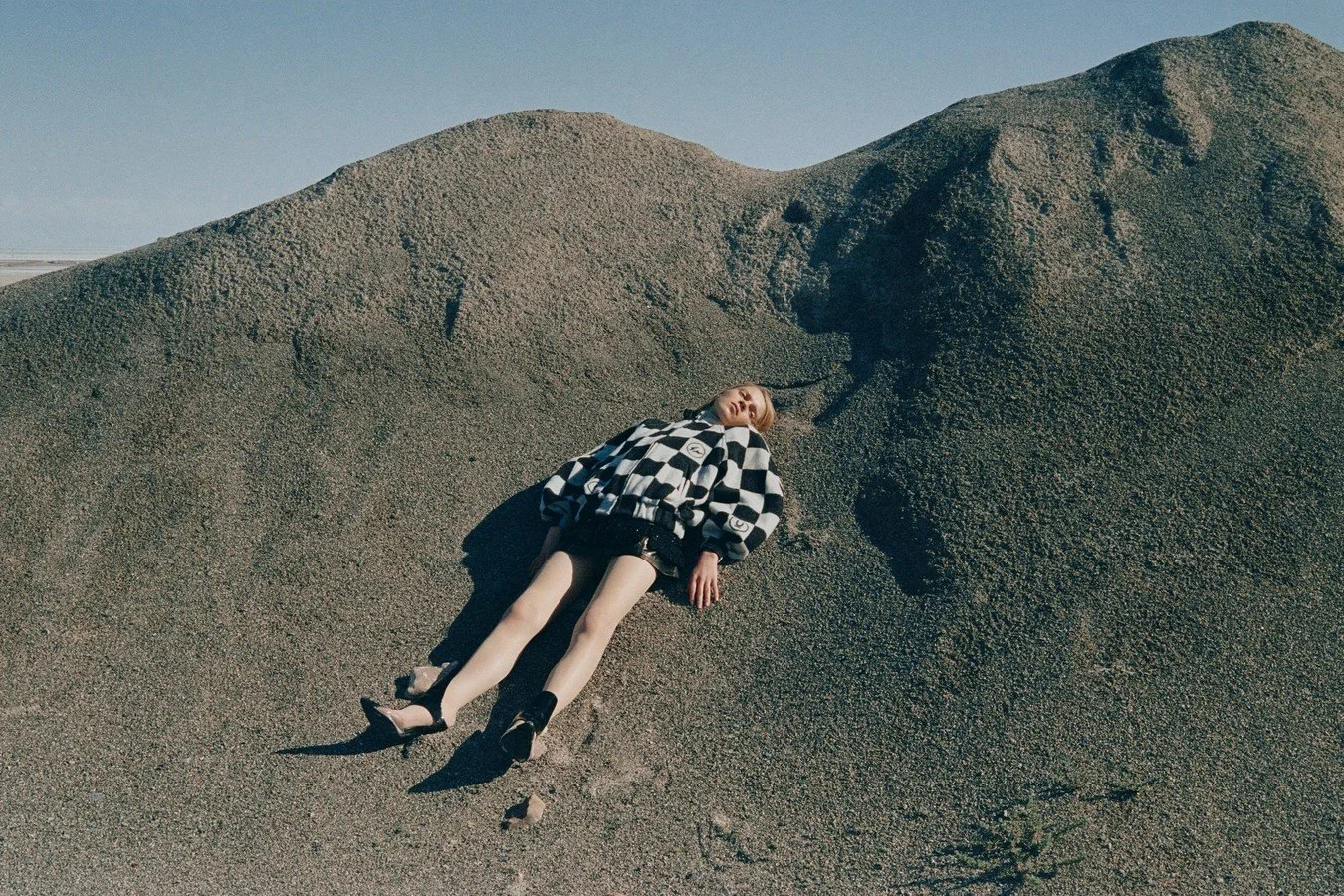
Symptoms of information overload often emerge at times of technological transformation. Fast change is framed as progress, but it can be felt as overwhelm. Side effects of being swarmed by stimuli vary, but all should be taken seriously.
Lions inhabit grasslands and savannahs², we occupy both Earth and virtual terrains—each characterised by unique sets of conditions and curiosities vying for our attention. Being dizzied by this reality doesn't make you flawed; the wooziness is increasingly collective.
In 2022, OpenText ran a survey to assess the level of sensory fatigue felt in the workplace³. Unsurprisingly, 80% of respondents reported being overloaded by information, a reality contributing to stress. Driving forces of the burden included constant streams of stimuli to process, data to interpret, and multiple apps to keep across daily. Given ChatGPT launched the same year as the poll⁴—followed closely by an inundation of AI integrations everywhere—it's not unreasonable to hypothesise that things may have gotten worse.
"Anxiety is the dizziness of freedom," Søren Kierkegaard once wrote⁵. As the philosopher lived during the 19th century, we can't ask him if the specific stress of information overload is linked to liberty, but we can speculate. "In anxiety there is the selfish infinity of possibility," he continues. "which does not tempt like a choice but ensnaringly disquiets ... with its sweet anxiousness." Our task may be to transform the disquietude of the digital age into a driving force to propel tech adoption in a more human direction.
AI can worsen cognitive chaos

You may not sense Kierkegaard's anxiety-induced infinity of possibility—or Baudrillard's disquieting strangeness—but you likely feel the expectation to adopt AI. In response, some have chosen AI sabotage; others are AI-ing with abandon. Regardless of your perspective, your mind may be in overdrive. Technostress, defined by academic Melissa J. Perry as the strain that occurs as tools grow more complex, has been taken to new heights⁶.
"A recent study published in Harvard Business Review by Julie Bedard and colleagues at Boston Consulting Group (BCG) describes something workers themselves have begun calling 'AI brain fry'," Perry writes. Of the nearly 1,500 employees surveyed, many reported symptoms of acute cognitive fatigue linked to heavy AI use—a tiredness exasperated when managing multiple AI systems simultaneously.
"Workers described mental fog, headaches, slower decision-making, and the strange sense that their thinking had become crowded," the study found⁷. Accelerated deployment paired with directionless adoption—plus the pressure to augment and automate—has led to what we could arguably categorise as a new workplace health and safety risk.
"Many modern technologies are designed without natural stopping points," Perry writes. "Emails accumulate, messages continue, and AI tools generate endless variations of work." Acknowledging the toll this takes on wellbeing is the first step towards healing. There are no formal protocols for injuries caused by cognitive overload, but it helps to be like the lion. By occupying Earth and virtual terrains in tune with mind and body; instinct and intuition⁸.
Honouring our humanness helps us heal

We're obviously not actually lions, but we're more alike to wild cats than we are to machines. All mammals are guided by senses; perceptions that can't be coded. If you experience the sweet anxiousness that Kierkegaard spoke of, listen to your body, it's telling you something.
“There are important differences between men and machines as thinkers," computer scientist Joseph Weizenbaum reminds us⁹. "However intelligent machines may be made to be, there are some acts of thought that ought to be attempted only by humans.”
Part of why we feel so overloaded by information¹⁰ is because we're expected to process stimuli like software. We're not bots though, we're sentient beings. Weizenbaum predicted that the introduction of computers “into our already highly technological society” would amplify the forces that drive us to ever more mechanistic images of ourselves—he was right.
Our cure for cognitive chaos will only come when we honour our humanness. Computer programs—including those labelled AI—can do a lot of many brilliant logical things. But software is not smarter than we are; it does not feel or think. "Computers and men are not species of the same genus," Weizenbaum writes. Our role is not to operate or process as devices do, but to experience the terrains we traverse sensorially, at our own pace.
Baudrillard wrote that there "is no longer any mirror or looking-glass in the modern order in which the human being would be confronted with his image for better or for worse; there is only the shop-window." Today, screens also divert our awareness away from the self. This alienates us from the senses trying to speak, intensifying symptoms of information overload further. "He is not reflected in that order, but absorbed and abolished," Baudrillard warns.
We may live in a highly technological society, but virtuality is not our natural habitat. Resist the vortexes of information by realigning with instinct and intuition. You're not built of bytes, you're born of flesh and blood. Installed not by software, but charged with spirit.
If you’d like to work with Kathryn, write to her.
Have art to share? Post your own lettre.
-
Simulacra and Simulation by Jean Baudrillard. Published by University of Michigan Press, via Readings
Unlock the information advantage to combat ‘information overload’ by OpenText
ChatGPT turns two: How it started, and how it’s going via IBM
The Concept of Anxiety: A Simple Psychologically Oriented Deliberation in View of the Dogmatic Problem of Hereditary Sin by Søren Kierkegaard via The Nile Group
AI and the Rise of Cognitive Overload by Melissa J. Perry, Sc.D., MHS, MBA via George Mason University College of Public Health
When Using AI Leads to “Brain Fry” by Matthew Kropp, Megan H., Olivia Karaman, Jason Hawes and Gabriella Rosen Kellerman, MD via Harvard Business Review
The Gut Decision Matrix: When to Trust Instinct and Intuition by Anne-Laure Le Cunff, PhD via Ness Labs
When Humans Prefer a Machine: Warnings from a 1960s Chatbot Creator by Joshua Pauling
The Consumer Society: Myths and Structures by Jean Baudrillard via SAGE Publications
-
Artwork courtesy of HOMME GIRLS
Photography | © Letty Schmiterlow
Agent | Artistry Global Creative Management & Representation
Creative Direction | Jen Brill
Model | Colin Jones
Styling | Andrew Sauceda
Hair | Tiago Goya
Makeup |
Client | Hommegirls
Casting | The Establishment
