We will all announce the future
“Popular art is characterised by vital expression, which is direct and collective,” Dutch painter Constant Nieuwenhuys once wrote. Proliferated tech is (currently) typified by obscure objectives, infused into personal and professional domains by the digital oligarchy. But this is not the end; we’ve only just begun.
To inspire us to shape the future via shared, vital expression, technologist Ben Byford and I recently exchanged ideas on the “tremendous soft power” we all embody. With force and fragility, we can erase the big of tech to transform it back into a force of empowerment and emancipation.
Embrace your mortality
Kathryn Carter: Ada Lovelace once wrote¹: “the Analytical Engine weaves algebraic patterns, just as the Jacquard loom weaves flowers and leaves.” What can only human beings—not algorithms—weave?
Ben Byford: Ada Lovelace had tremendous foresight in this claim. She goes on to describe the many uses of such patterns that could represent music, images as well as mathematics.
One’s perspectives can drastically colour their opinions. If you see yourself as a thinking ape, a tool user—and feel that algorithms are indeed an extension of our own ingenuity—then, in a meta sense, we can weave anything that algorithms can and more.
From a different stance, in opposition to hard maths and cold, analytical statistics, humans can do everything algorithms are not. We can live and die, we can want and strive, we can empathise. Crucially, we can create and destroy.
Kathryn: We are mortal and metamorphic, not mathematical.
Ben: Yes, [whereas] algorithms are composed of extremely simple parts built into massively complex structures that we cannot currently understand or empathise with. Our tools are getting so complex, we are letting them do random things of their own in the hope they will be right, good, helpful or even safe. Sometimes they’re not.
Kathryn: In their text Aesthetics of the Commons², Cornelia Sollfrank, Felix Stalder, and Shusha Niederberger propose that, within communication, “nearly all modes of relating—from the most public and to the most intimate ones alike—have been subsumed under powerful technical systems.”
The co-editors feel that these systems follow “strictly commercial imperatives of data extraction and advertisement-driven nudging, with little regard to psychological or societal consequences.” How can we grow new social and technological imaginaries to escape this loop?
Ben: This is indeed the problem of our time. How can private interests benefit us all in a digital world? On questions of capitalism, techno-feudalism, and data oligarchy, I tend to respond with hasty solutions, instead of more considered diagnosis. But it strikes me everyday that we live in a globally connected world, and that we should probably care about the future of our planet, society and all people in general.
Countries in the West have, for the most part, been built on a system of private gain and ideologies of individualism. The logic of commodification extends to everything and everyone. Communications is but the latest victim in this system.
Kathryn: Private interrelationality has been penetrated by exterior forces. But surely there’s a way to shatter and restructure this system for the greater good?
Ben: It feels like we need to acknowledge three things. One, this system doesn’t look sustainable in the long run. It also doesn’t seem to make an effort to fix the wealth gap or digital divide. Two, the world is interconnected with many shared problems; a global system of governance could probably attempt to deal with these challenges. Finally, cut the head off capitalism, it’s not working, it needs changing. And, from where I’m standing, it would behoove us to close the gap between people in poverty and billionaires.
Look past the AI job-pocalypse and “oomerism” hype
Kathryn: The Australian financial review recently reported³ that “the looming AI ‘job-pocalypse’ is heavily overstated.” As someone close to the tech sector, what are your thoughts?
Ben: The stark reality is: work is changing. For some of us, that will be good. But for the large majority, the change may be too far to recover from. Some jobs will go away, some will be hollowed out by AI automation; some will be done by many fewer people. You can stick your head in the sand and hope for the best but work is changing and you may not like what your job becomes.
Kathryn: It’s unfortunate that wages are now required (for most) to access means of subsistence. In days of yore, you didn’t necessarily need to be an employee to exist. Humans got on with life and looked after one another.
Ben: Well, the other side of the coin [is]: good riddance to work! To toil, to drudgery, to pointless activity you hate. A post-work world could run on AI, robotics, part-time vocations and volunteering. There is a world in which AI is yet another tool that we can wield to use for the prosperity of everyone. But, in my view, the systems in place promote the mis-use of capabilities primarily for the gain of a few. Most of our problems are related to the coordination of people, nothing really to do with technology.
Kathryn: On the topic of the coordination of people, AI hype places strong focus on doomers and boomers, and bloomers and zoomers⁴—I call it “oomerism”. Do you think these labels distract from the serious dialogue needed to veer tech development in a more ethical direction?
Ben: There’s a lot of confusing and, sometimes, hazy or conflicting language in play. When you’re talking about AI, what are you (really) talking about? If you ask someone, you may get a myriad of different answers. And what’s an AI harness, the singularity, AGI, responsible AI, and AI governance? They’re so loosely defined; you’d be excused for being confused by the litany of new terms. Even the way AI is defined has changed since the term was first coined.
So no, I don't think most of the language is very useful and indeed obfuscates the complexity underneath. It prevents us from getting on the same page, and forming a shared understanding. Unless you’re an expert, it’s extremely hard to form a strong opinion about AI’s trajectory and its impacts—negative or positive.
Kathryn: Given the time investment (interest and research) needed to acquire an informed opinion, perhaps it seems simpler to stick on a doom, boom, bloom or zoom name tag at the AI party.
Ben: Yes, it’s also very difficult to get a balanced view on any of this. Everyone has been algorithmically sorted into their own personal echo chambers. If you saw my LinkedIn, you’d think the only people in the world were those pointing out the issues with AI. But of course there are other things in life.
Harness your human power
Kathryn: Speaking to your career trajectory last year, you said: “Everyone keeps calling themselves an AI ethicist and now I have to, so that I’m in the gang and that people know what I do …. [but] it’s kind of weird though, isn’t it?” Can you expand on the weirdness of this new and “sexy” label?
Ben: Yeah, it's strange to me that I was part of a small group of people who were interested in the social impacts of machine learning (ML) technologies back in 2015. Back then, academic literature featured terms like machine or computer ethics, human machine interfaces, cybernetics etc. The term AI ethicist was coined for people who were starting to sound the alarm on issues inherent with using ML in all sorts of places. Examples include: hand dryers that can’t detect dark skin tones, driverless cars that can literally kill people, or asking Alexa for advice and getting unbalanced clickbait responses.
It was clear that predictive statistical tools were useful, but there were dangers. AI ethics became a catchall for anyone interested in or striving towards better research, risk management, and awareness.
Kathryn: Your podcast Machine Ethics does focus on such concerns. I trust its evolution has synced with your own metamorphosis as an ML ethicist?
Ben: I'm not formally trained as a philosopher. However, I’ve spent a decade talking to professionals from all realms about this area. I also consult on ethical applications of AI and tech. So the AI Ethicist label has stuck, it’s a shorthand for my experience, but knowing your limits is also key. When I’m working with any organisation to help identify and mitigate risks in AI integration, I put together teams of people with varied backgrounds to lend their perspectives.
Kathryn: In 1948, Dutch painter Constant Nieuwenhuys wrote⁵: “A new freedom is about to be born, one which will allow people to satisfy their creative desires … In the period of transition, artistic creation finds itself at war with the existing culture, while simultaneously announcing a future culture. With this dual aspect, art has a revolutionary role in society.” Do you think art has a role to play in transforming the trajectory of AI and tech development more broadly?
Ben: I believe in the tremendous soft power that culture has in setting norms and guiding ideologies, and thus the future. If we can't think it, then it’s very hard to make it. I believe fine art, poetry, music etc is always fighting against the edges of ideas, of taboos, what it means to live and exist. This extends to our current AI-mediated situation. However, I challenge anyone who wants to create and steer the future with the following: we shouldn't just create rallying calls against the current situation—we should pose new ideas for flourishing in the future. To be apathetic is probably the worst thing one can be.
Kathryn: Agreed, an inspiring note to end on Ben. Let’s tie it in a bow with a few words by French philosopher Maurice Merleau-Ponty⁶. “For it is the horizon of the world that secretly guides us in our constructions and harbors the truth of the procedures of reflection by which we pretend to reconstitute it— a first positivity of which no negation of our doubts could be the equivalent.”
If you’d like to work with Kathryn, write to her.
Have art to share? Post your own lettre.
-
Monstrous glitches and loving intensities by Stefanie Hessler via Ada Lovelace Institute
Aesthetics of the Commons, edited by Shusha Niederberger, Cornelia Sollfrank, Felix Stalder. Published by Diaphanes.
Why the looming AI ‘job-pocalypse’ is heavily overstated by Richard Holden via the Australian Financial Review
Embracing AI: Are You a Doomer, Gloomer, Zoomer, or Bloomer? By Angie Basiouny via Knowledge at Wharton
The Assault on Culture: Utopian Currents from Lettrisme to Class War by Stewart Home
-
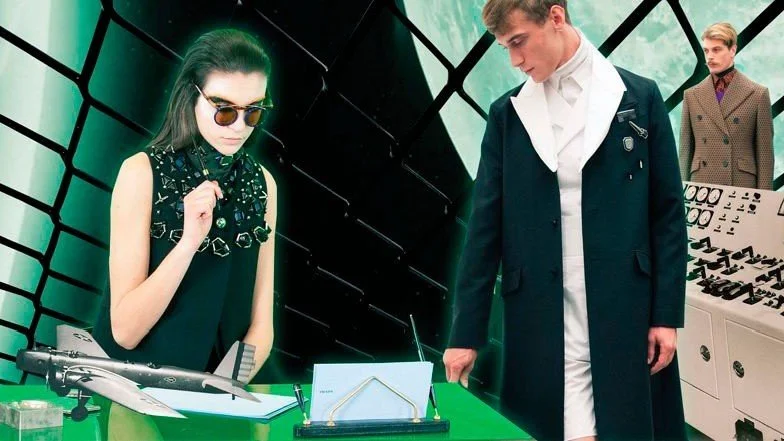
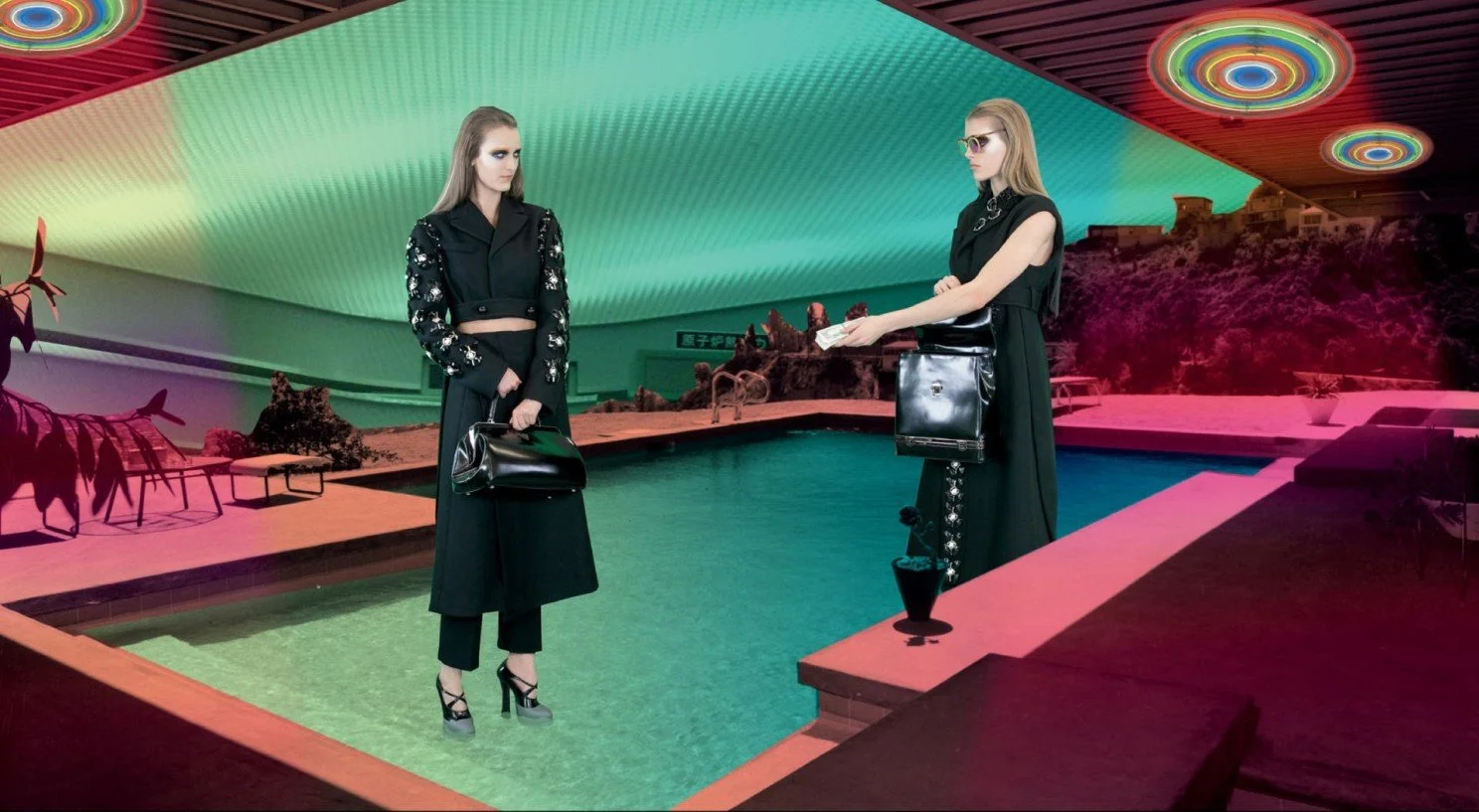
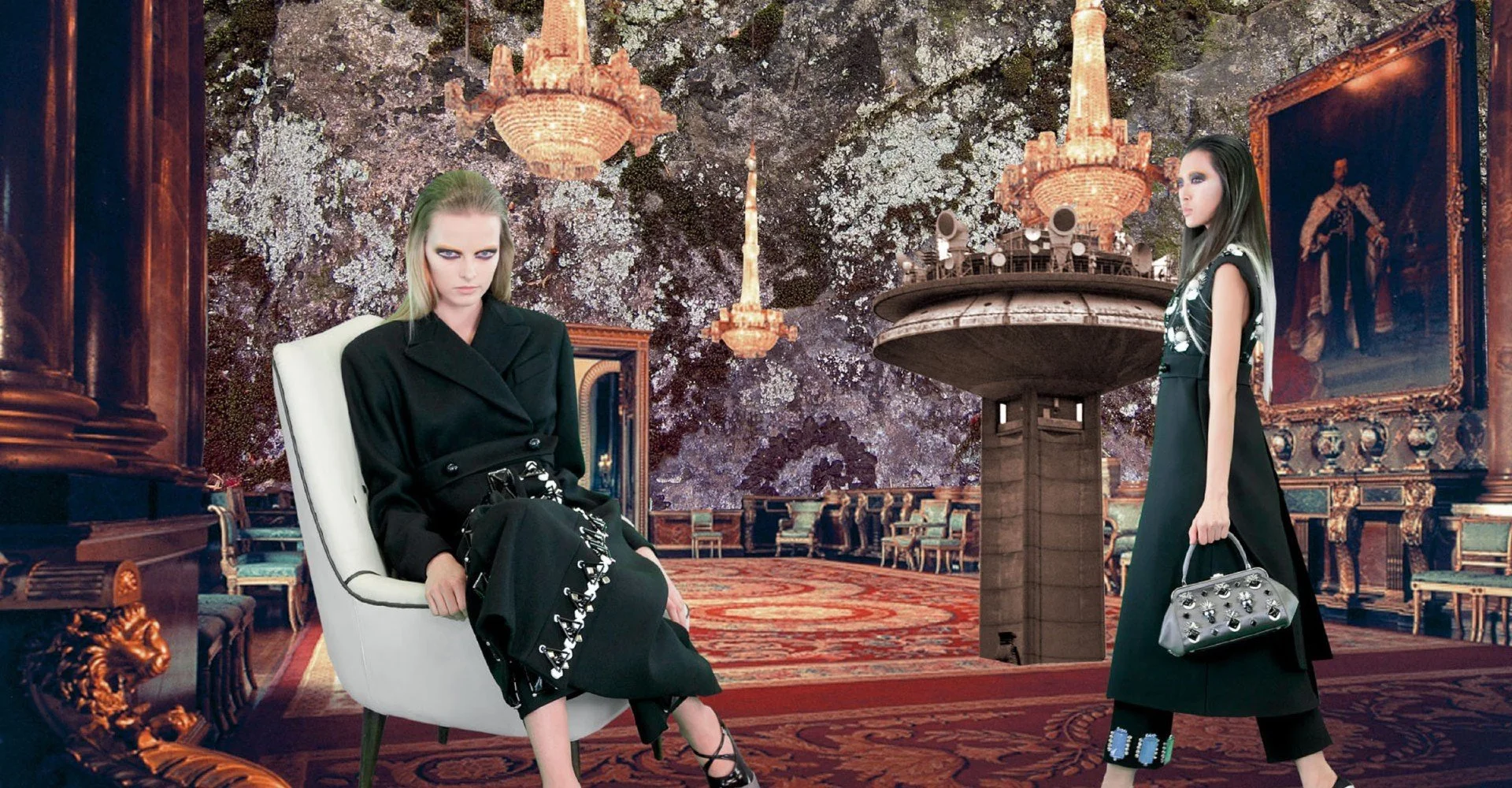
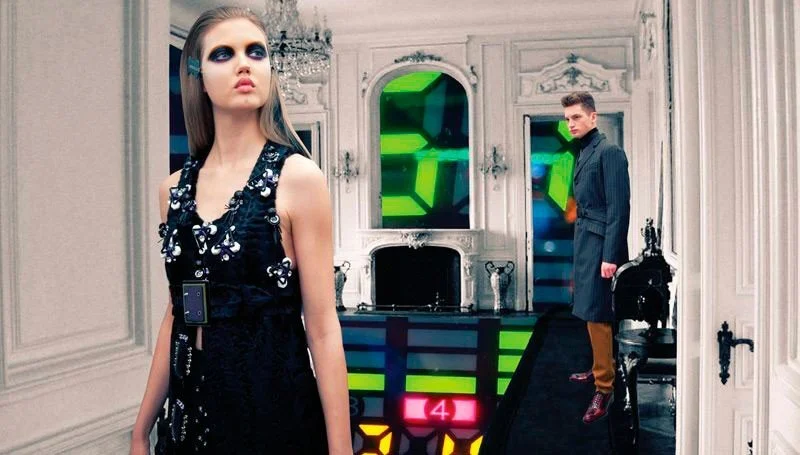
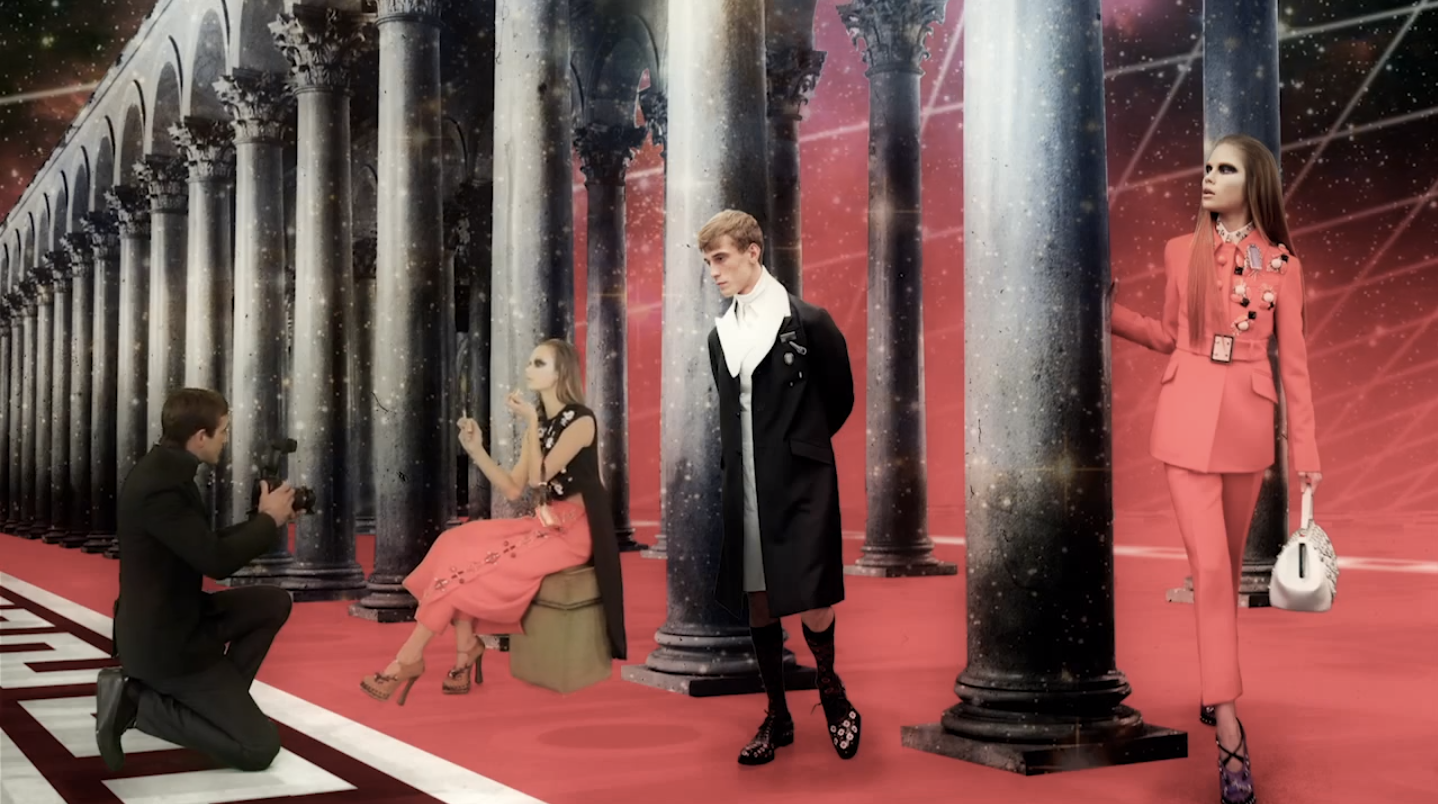
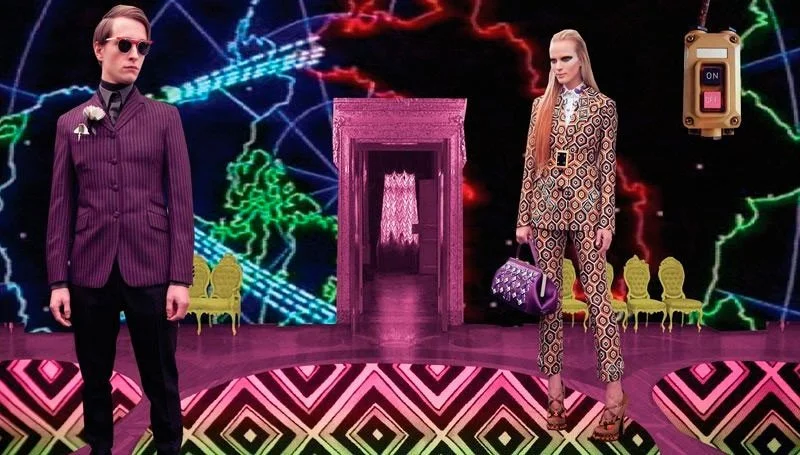
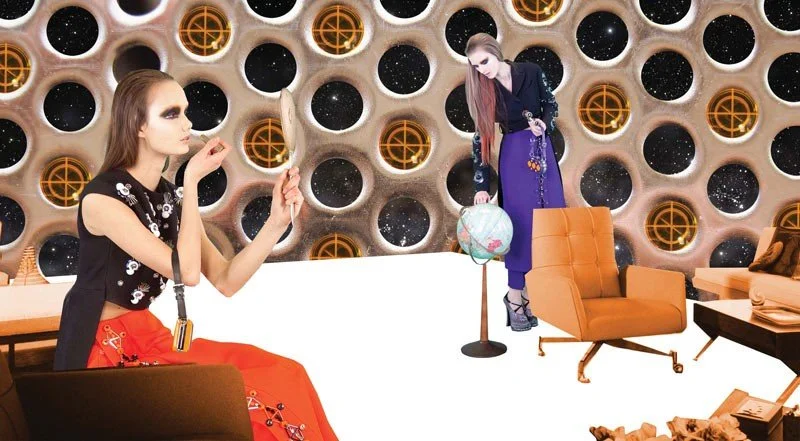
Artwork courtesy of Prada via Fall/Winter 2012 lookbook Real Fantasies
Photography | © Phil Meech
Artwork | Jeroen Koolhaas and Lok Jansen
Creative Direction | Fausto Fantinuoli of REPOSSI
Production | Ippolito Pestellini Laparelli
