We already feel the perils of AI
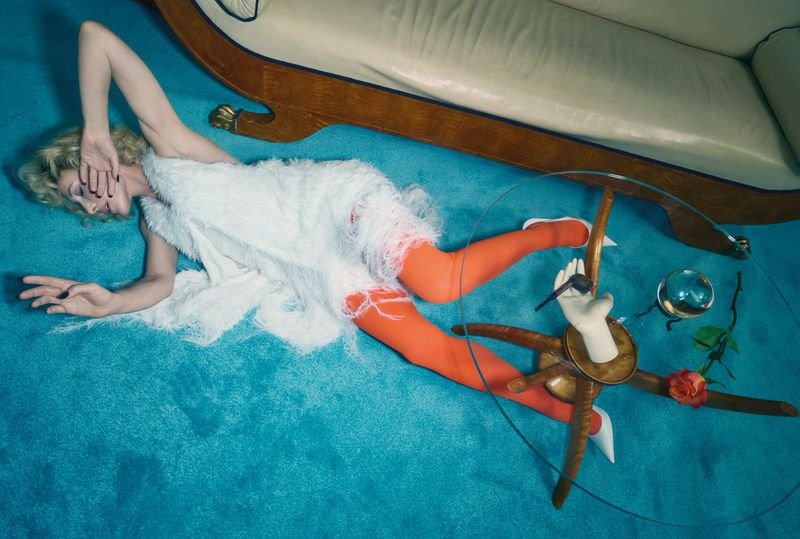
Cate Blanchett by © Emma Summerton for Harper's Bazaar UK
You've been told the AI apocalypse is coming¹. Yet the apocalyptic consequences of artificial intelligence remain speculative in nature. Less conjectural and far more concrete are the dangers women face in a world where "AI" tools remain largely unregulated.
As reported by Victorian Women's Trust (VWT), new research warns that the gendered harms of artificial intelligence are not isolated incidents but a cascading system². "Women’s exclusion from AI design and governance triggers multiple, compounding harms across women’s safety, work, and political voice." AI doomsday predictions thus distract us from damage already done by rapidly developed and unconsciously deployed systems.
"All women, whatever be their position, should demand political equality as a means of a freer life, and one calculated to yield rich blessings to society," German Marxist theorist Clara Zetkin once wrote³. Demands for such equality must also extend into the tech sector, to protect women and girls from the psychosocial perils of "AI".
Where AI is going wrong
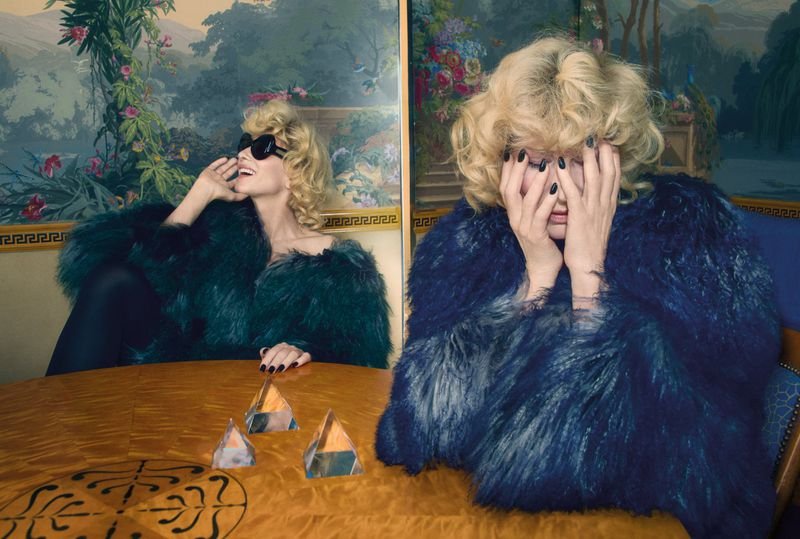
Cate Blanchett by © Emma Summerton for Harper's Bazaar UK
Last month, VWT published 20 gendered harms present in the current tech landscape⁴. Given Australia’s AI regulation is foggily defined, these dangers highlight the need for policy makers to take emerging hazards seriously. Contrary to the doomsday warnings that AI may "turn against us" some time in future, software systems are already adversely affecting the lives of women and girls via both overt and subtle mechanisms.
"AI impacts women and gender diverse people’s lives in significant ways, from job losses due to automation to image-based abuse through to deepfakes," said Dr Kirsten Abernethy, Executive Director of VWT. "Safeguards are scarce. Right now, Australia has no binding, AI-specific legislation federally. We’re relying on a patchwork of anti-discrimination, privacy and consumer protection laws that were never designed to address algorithmically-driven harm." Turning the patchwork into substantial regulation will require collective, societal consideration—from everyone, not just policy makers.
When speaking on women's rights in 1889, Zetkin stated the question of the true liberation of women was not an isolated one. "They [women] know very clearly that this question in today's society cannot be solved without a basic transformation of society. The question of the emancipation of women is a child of modern times, born by the machine age."
The same can be said about the protection of women within digital landscapes littered with unregulated "AI". Far from being an isolated issue, the question of how to keep women safe in the presence of emerging software capabilities cannot be solved without comprehensive cultural shifts. "The emancipation of women means the complete transformation of their social position and a revolution in their economic role," Zetkin writes. A metamorphosis that we must also strive towards if we're to develop safer technological systems and paradigms.
How feminism helps mitigate harms

Cate Blanchett by © Emma Summerton for Harper's Bazaar UK
“Women, they have minds, and they have souls, as well as just hearts. And they’ve got ambition, and they’ve got talent, as well as just beauty," author Louisa May Alcott once wrote⁵. "I’m so sick of people saying that love is all a woman is fit for." Thankfully, women have been considered fit for a lot more than just loving for some time now. That said, female views are still frequently overshadowed in the tech landscape, which is why feminist artificial intelligence (FAI) must play a role in the design and delivery of new and existing systems.
In the words of FemAI⁶, the FAI approach "uses intersectional feminism to combat bias and inequality in AI systems." Distinct from tech development models driven by male-dominated teams made up of strictly STEM disciplines, "FAI relies on interdisciplinary collaboration, the analysis of power structures, and a constant interplay between theory and practice."
Just as Alcott grew sick of people believing women were only fit for love, many are tired of frameworks that limit the consequential participation of female voices. In the words of VWT: "feminist approaches to AI must move beyond just critique, to practice for the betterment of women and girls in particular and society at large."
According to the independent philanthropic organisation, FAI gives us a launch pad from which to catapult the hard questions that few seem willing to ask, including:
Can the current trajectory of AI be challenged and reshaped through a feminist ethic of care?
Does the sector have to develop using the “move fast and break things” approach?
Is a “speed up” possible on AI ethics alongside a “slow down” on unchecked development?
Contrary to the mainstream belief that widespread AI deployment is inevitable, FAI invites us to challenge that theory. We already know that AI tools are accelerating social harms and reinforcing structural inequalities; that rouses a call to action, not an acceptance of defeat. "Engraining both social and technological considerations together in developing, deploying and using AI is necessary, as well as recognising the spaces where AI may be inappropriate altogether," VWT writes. For this to occur, all voices must be heard.
When to take action
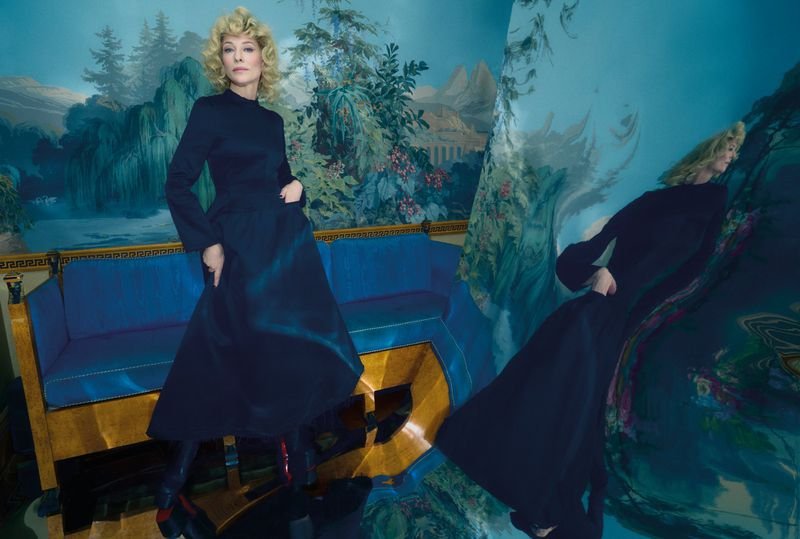
Cate Blanchett by © Emma Summerton for Harper's Bazaar UK
"Machine production has killed the economic activities of women within their families," Zetkin announced in 1889. Today, female-dominated occupations are disproportionately automated by artificial intelligence systems. Couple this with women's underrepresentation in the tech sector—plus biased recruiting systems that suppress wages—and we fall into the eye of a perfect storm. The "AI" sector is subverted; the time to take action is yesterday.
"Technology should serve culture, not strip it for parts. AI has no Dreaming. It does not know Country, carry kinship, or hold the responsibilities that come with cultural knowledge," Dr Terri Janke says⁷. As a Wuthathi and Meriam woman and lawyer, she understands all too well the promise and peril of artificial intelligence for First Nations peoples. Tech impacts women and girls in similarly omnidirectional ways, both risking harm and giving hope, depending on designs and safeguards. Only once technology is rooted in conscious intentions—not mere ploys for profit—will we alleviate the immoral moves made by unregulated market players.
"The emancipation of women as well as all of humankind will only occur within the framework of the emancipation of labor from capital," Zetkin believed. To become liberated within the techno-capitalist landscape⁸, we must critically question who a technologically managed future—feat. "AI" edged in everywhere—will genuinely serve. Many active "AI" tools and systems disempower women and girls every day; that must change.
VWT research⁹ has already made it clear that "a ‘wait and see’ approach is fundamentally incompatible with the gendered harms emerging from rapid AI development and deployment across Australia." Thus, it's time we borrow from the courage Alcott once so poetically described. “I am not afraid of storms, for I am learning how to sail my ship," she writes. A mentality that will serve us well as we advocate for feminist approaches to help us transform the tainted terrain of toxic tech. Nothing is inevitable, no system is forever; we all hold the pencils that colour in our shared horizons.
-
'Let’s Get Specific About These Doomsday Scenarios' by Roge Karma via The Atlantic
“Harms are cascading” Victorian Women’s Trust maps 20 gendered harms as Australia’s AI regulation lags via Victorian Women's Trust
'Gender and AI: Where's the Harm?' by the Victorian Women's Trust(2026)
'What is Feminist AI?' by Alexandra Wudel and Anna Ehrenbergvia FemAI
'AI Got No Dreaming: Defending Indigenous Rights in the Digital Age' by Dr Terri Janke
'Techno-capitalists think innovation can save the planet. But that same thinking is what got us here' by Richard King via The Guardian
'Gender and AI: Where’s the Harm? | Research Snapshot' by Dr. Elise Stephenson GAICD
-
Photographer | © Emma Summerton
Fashion Editor/Stylist | Charles Varenne
Hair Stylist | Sam McKnight
Makeup Artist | Val Garland
Manicurist | Abena Robinson
Set Designer | Trish Stephenson
Model | Cate Blanchett
Publication | Harper's Bazaar UK
Quisque iaculis facilisis lacinia. Mauris euismod pellentesque tellus sit amet mollis.