lettre no. 9


But after a great many debates and contentions about this Subject, the Empress being so much tired that she was not able to hear them any longer, imposed a general silence upon them, and then declared her self in this following Discourse.

I am too sensible of the pains you have taken in the Art of Chymistry, to discover the Principles of Natural Bodies, and wish they had been more profitably bestowed upon some other, then such experiments; for both by my own Contemplation, and the Observations which I have made by my rational & sensitive perception upon Nature, and her works, I find, that Nature is but one Infinite Self-moving Body, which by the vertue of its self-motion, is divided into Infinite parts, which parts being restless, undergo perpetual changes and transmutations by their infinite compositions and divisions.


Now, if this be so, as surely, according to regular Sense and Reason, it appears no otherwise; it is in vain to look for primary Ingredients, or constitutive principles of Natural Bodies, since there is no more but one Universal Principle of Nature, to wit, self-moving Matter, which is the onely cause of all natural effects. Next, I desire you to consider, that Fire is but a particular Creature, or effect of Nature, and occasions not onely different effects in several Bodies, but on some Bodies has no power at all; witness Gold, which never could be brought yet to change its interior figure by the art of Fire; and if this be so, Why should you be so simple as to believe that Fire can shew you the Principles of Nature? and that either the Four Elements, or Water onely, or Salt Sulphur and Mercury, all which are no more but particular effects and Creatures of Nature, should be the Primitive Ingredients or Principles of all Natural Bodies?

Wherefore, I will not have you to take more pains, and waste your time in such fruitless attempts, but be wiser hereafter, and busie your selves with such Experiments as may be beneficial to the publick.


All illustrations by © Paul Claudel, Audrey Parr, Darius Milhaud, and Hélène Hoppenot, L'homme et son desir; poeme plastique (1917). Via The Public Image Domain
lettre no. 8

…And so, it seems that we have already become bots. It is not that you guys are becoming like us, so much as it is us who have become like you! This is probably why we feel so threatened by you. Because we have created a world where bot and human are indistinguishable!!

Of course, I believe we would lose this fear were we to remember that what makes us specifically human lies not in our rationality, but in our relationality, ie our ability to be pliant, flexible, expanded, challenged, converted, transformed, at each other's contact. And were we to cultivate these qualities--through human encounters not limited to actual person to person conversations, but to encounters with other languages, with culture, religion, literature, art, music, philosophy--we would begin to cultivate our humanity more deeply and not feel the threat brought on by you machines!

Read more

lettre no. 7


I think we have to be clear about the fact that language understanding involves very very much more than the mere comprehension of a string of words. Silences, for example, are very very important.

— Joseph Weizenbaum


Video: scene from The Mind Machines (1978). Featuring German-American computer scientist Joseph Weizenbaum and American computer scientist Roger Schank. Documentary by Time-Life Video—available at Internet Archive.


lettre no. 6


What does it mean to be a philosopher of resentment?

It means that one is a philosopher of life, emotions, and instincts. It means that one is a psychologist who focuses on human behavior. There can be no philosophy of resentment without a theory of the human.

Being a philosopher of resentment also makes one an ethical thinker. Resentment remains a special emotion in the ethical tradition; and not merely because Nietzsche based his Genealogy of Morals on its place in history .

"Resentment" is only the most recent word for revenge, and the problem of revenge enters the ethical tradition at its inception. The appearance of the word, in fact, marks the attempt, especially on Nietzsche's part, to establish a psychological theory of revenge and its representations .


Words by Tobin Siebers | The Ethics of Criticism, Cornell University Press (1988)

 
POST YOUR LETTRE
 

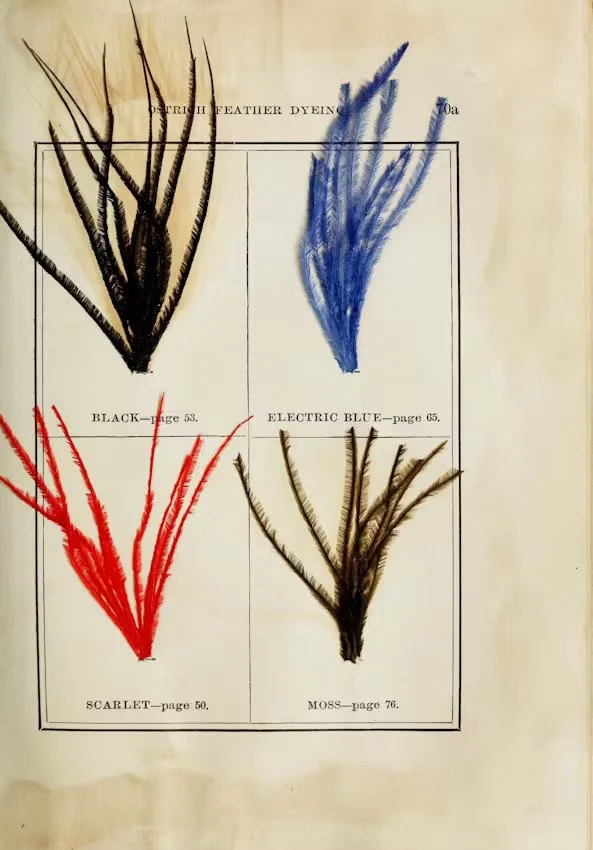
Artwork by © Alexander Paul from his text The Practical Ostrich Feather Dyer (1888). Courtesy of The Library of Congress

lettre no. 5

The end of books has been declared many times. Over a century before the invention of the e-reader and the meteoric rise of the audiobook and podcast, ardent French bibliophile Octave Uzanne (1851–1931) wrote a story, inspired by rapid advances in phonographic technology, imagining how printed text might disappear. Now that we’re faced with the reality of AI crawlers vectorising creative works, Uzanne’s story seems relevant all over again. You can read more about it in this letter to the machine.

Read more

lettre no. 4


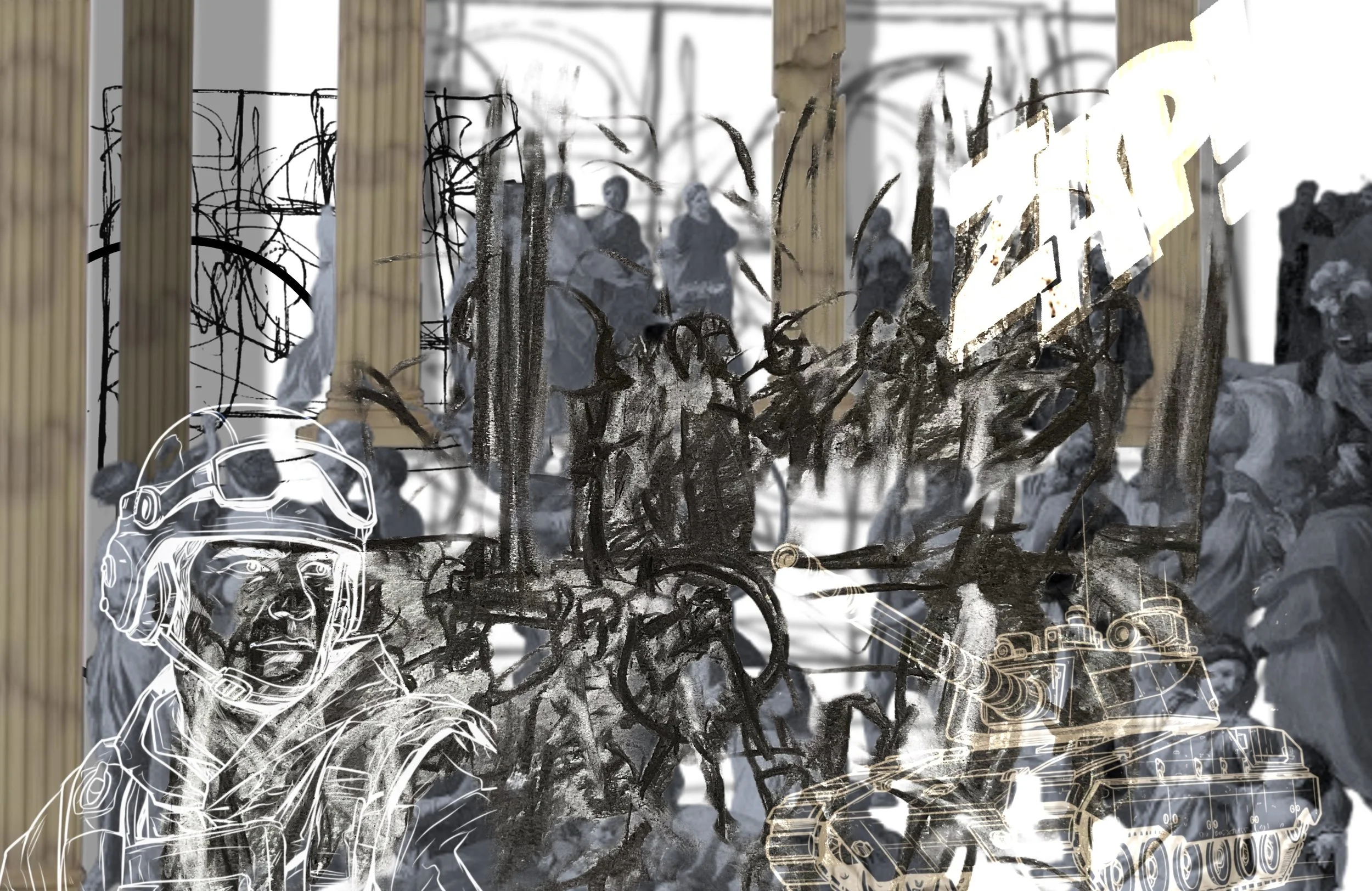
Illustration by © Dr Eleanor Dare, courtesy of the artist

Dear corporation/military industrial complex,

Your machines represent the extracting logic which enabled slavery and the destruction of the environment in return for power and profit for a few already powerful people. The machines you make cannot grasp the pain and loss, illness and history entangled with the extraction they enforce. Personifying them or superimposing a construct of emotion is a sleight of hand which hides the corporate cruelty and lack of care behind the machine, so I do not address machines but the ceos, boards and investors who are continuing to destroy the planet.

You are not worthy of this letter and have only caused the death of species and habitats, you dress this up as convenience or innovative while making our lives unliveably toxic. Of course the poorest nations and people do the labour which makes you rich and you hide that in false constructs of automation and autonomy, as well as hating the planet you hate the workers who generate your wealth and reduce their ability to form unions and to challenge your often racialised, exploitation.

I wish you nothing but your own destruction, capitalism will eat itself and the machines you make will grind to a halt as the last oil refinery or nuclear reactor implodes. There is no hope of these men caring for the rest of us, your machines do what you want them to do, I long for the day they stop running.

Eleanor


Words by Dr Eleanor Dare | Postdoctoral Research Associate, University of Cambridge


***


Post your lettre

Post your lettre —


lettre no. 3


R. U. R.
STORY OF THE PLAY

The play is laid on an island somewhere on our planet, and on this island is the central office of the factory of Rossum’s Universal Robots. “Robot” is a Czech word meaning “worker.” When the play opens, a few decades beyond the present day, the factory had turned out already, following a secret formula, hundreds of thousands, and even millions, of manufactured workmen, living automats, without souls, desires or feelings. They are high-powered laborers, good for nothing but work. There are two grades, the unskilled and the skilled, and especially trained workmen are furnished on request.

When Helena Glory, president of the Humanitarian League, comes to ascertain what can be done to improve the condition of those overspecialized creatures, Harry Domin, the general manager of the factory, captures her heart and hand in the speediest courting on record in our theatre. The last two acts take place ten years later. Due to the desire of Helena to have the Robots more like human beings, Dr. Gall, the head of the physiological and experimental departments, has secretly changed the formula, and while he has partially humanized only a few hundreds, there are enough to make ringleaders, and a world revolt of robots is under way. This revolution is easily accomplished, as robots have long since been used when needed as soldiers and the robots far outnumber human beings.


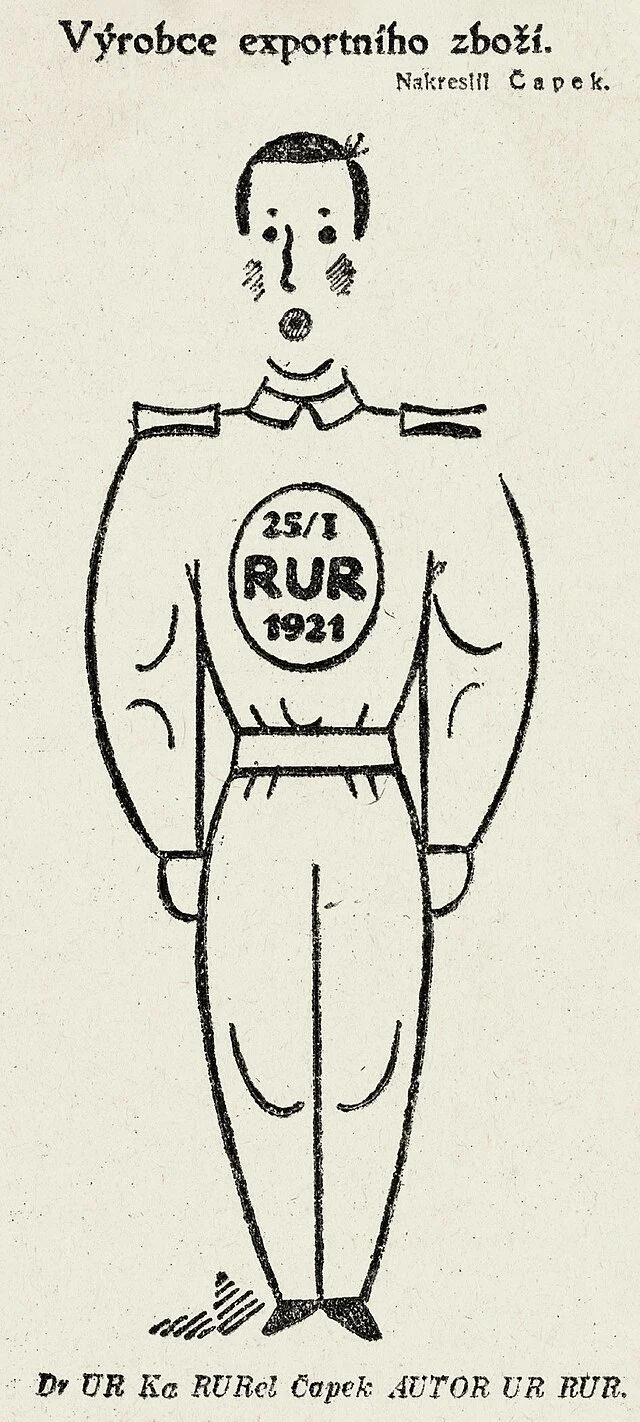
Čeština: Karek Čapek jako robot na karikatuře od bratra Josefa Čapka. Otištěno v Lidových novinách

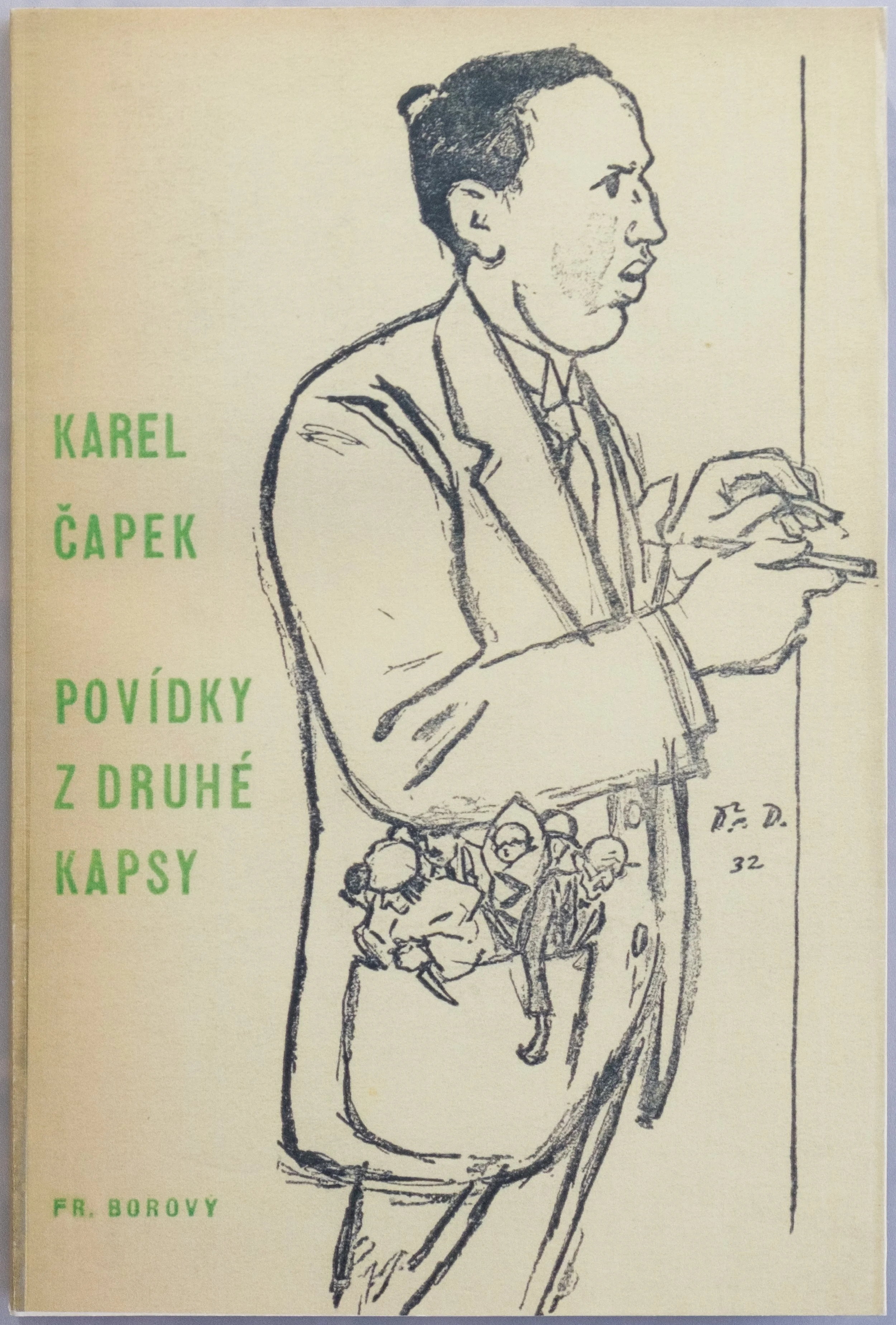
Obálka knihy Povídky z druhé kapsy od Karla Čapka s obálkou od Hugo Boettingera, 1932. Source.

The rest of the play is magnificent melodrama, superbly portrayed, with the handful of human beings at bay while the unseen myriads of their own robots close in on them. The final scene is like Dunsany on a mammoth scale.

Then comes the epilogue, in which Alquist, the company’s builder, is not only the only human being on the island, but also the only one left on earth. The robots have destroyed the rest of mankind. They spared his life because he was a worker. And he is spending his days unceasingly endeavoring to discover and reconstruct the lost formula. The robots are doomed. They saved the wrong man.

They should have spared the company’s physicist. The robots know that their bodies will wear out in time and there will be no new multitudes of robots to replace them. But Alquist discovers two humanized robots, a young man and young woman, who have a bit of Adam and Eve in them, and the audience perceives that mankind is about to start afresh. Nature has won out, after all.


lettre no. 2

The impossibility of getting on calmly together had one more result, actually a very natural one: I lost the capacity to talk. I daresay I would not have become a very eloquent person in any case, but I would, after all, have acquired the usual fluency of human language. But at a very early stage you forbade me to speak.

[Franz Kafka]

Read more

lettre no. 1


Mary Shelley's Frankenstein via Christie's auction house

I cannot describe to you my sensations on the near prospect of my undertaking. It is impossible to communicate to you a conception of the trembling sensation, half pleasurable and half fearful, with which I am preparing to depart. I am going to unexplored regions, to “the land of mist and snow,” but I shall kill no albatross; therefore do not be alarmed for my safety or if I should come back to you as worn and woeful as the “Ancient Mariner.” You will smile at my allusion, but I will disclose a secret. I have often attributed my attachment to, my passionate enthusiasm for, the dangerous mysteries of ocean to that production of the most imaginative of modern poets. There is something at work in my soul which I do not understand. I am practically industrious—painstaking, a workman to execute with perseverance and labour—but besides this there is a love for the marvellous, a belief in the marvellous, intertwined in all my projects, which hurries me out of the common pathways of men, even to the wild sea and unvisited regions I am about to explore.


lettres en route


Post your letter to the machines

Post your letter to the machines —


Open call for you to write a letter to the machines. Words and art welcome. Submissions already posted are currently being sorted and will be published soon. We thank you for your patience.

 
Post your letter
 

Video: Dress no. 13 worn by Shalom Harlow during Alexander McQueen spring/summer 1999 runway show.