Human inside the loop
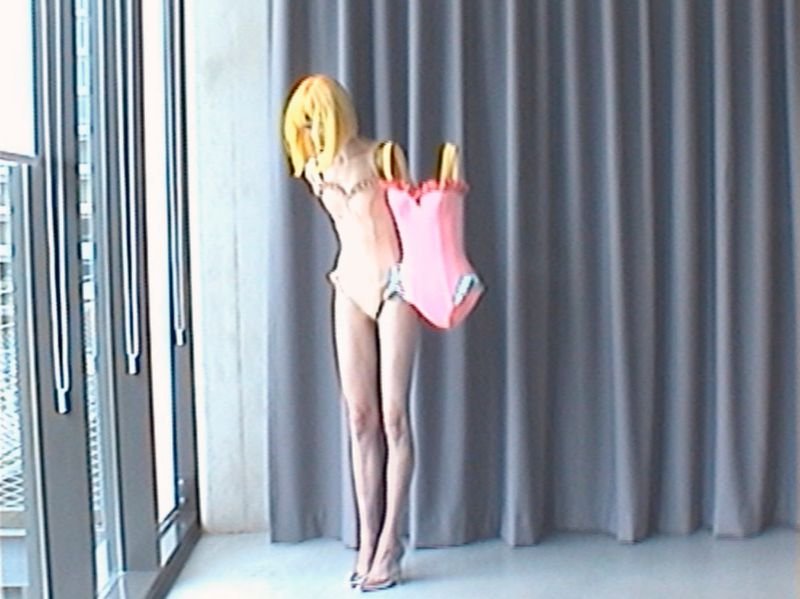
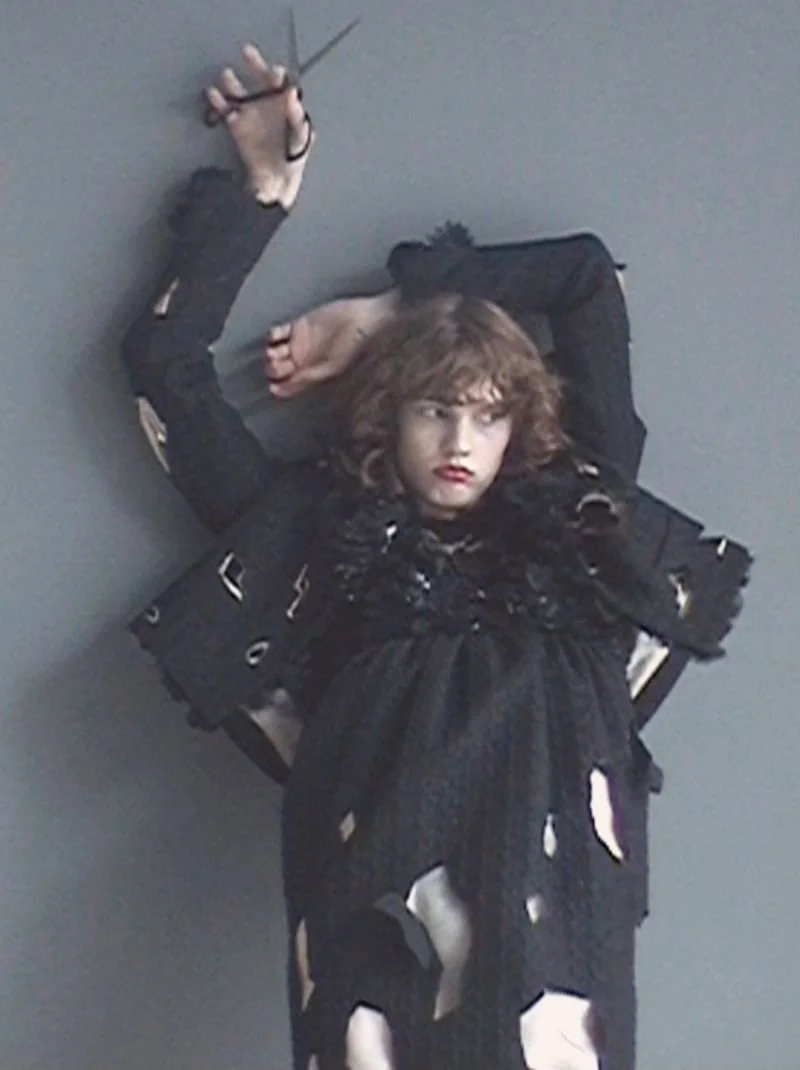
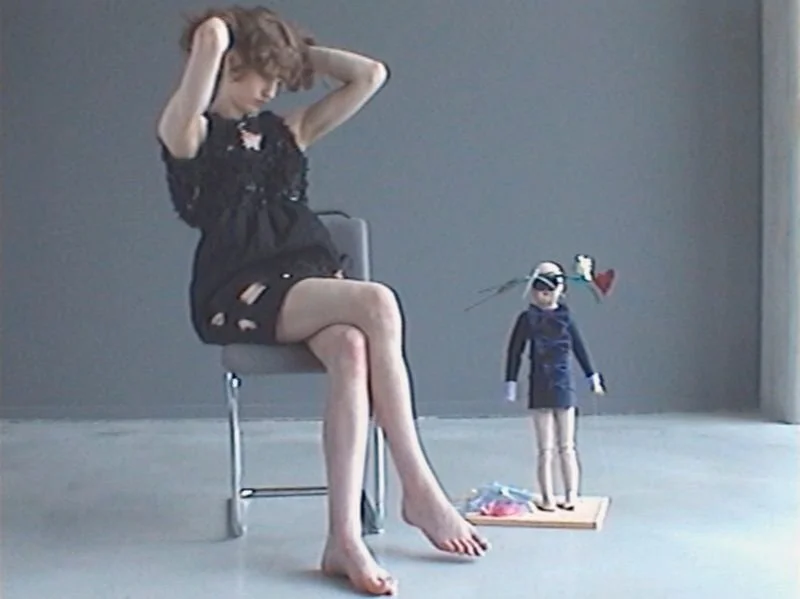
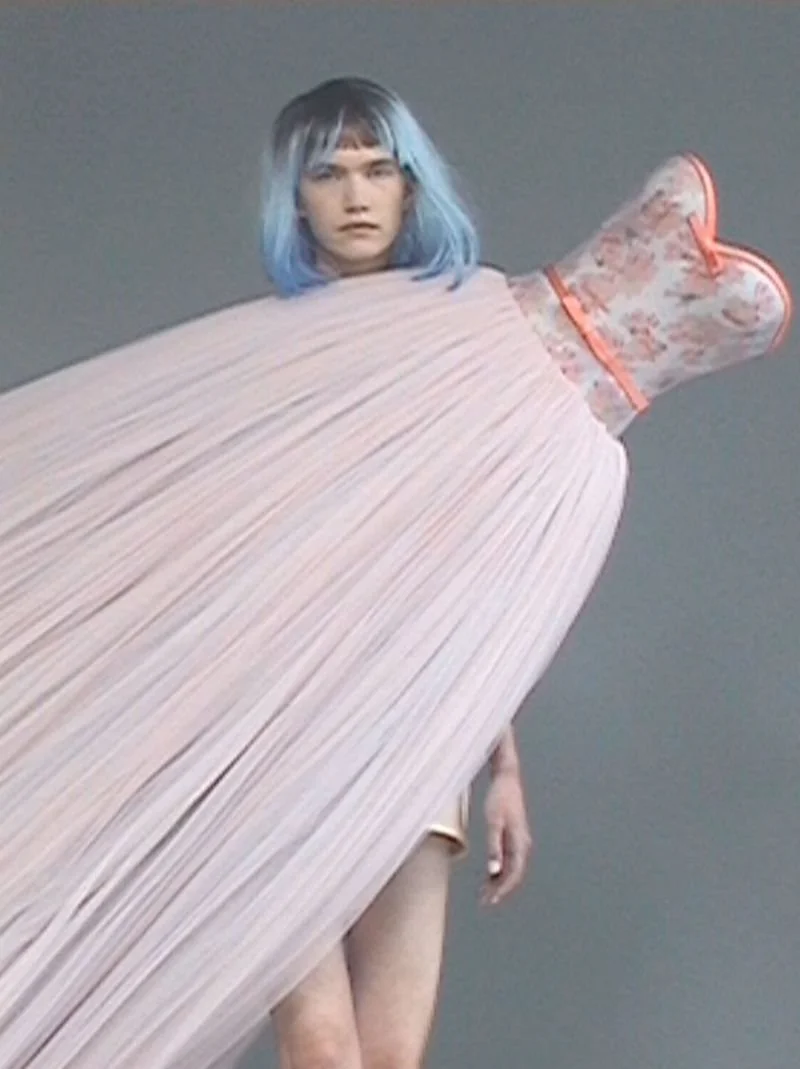
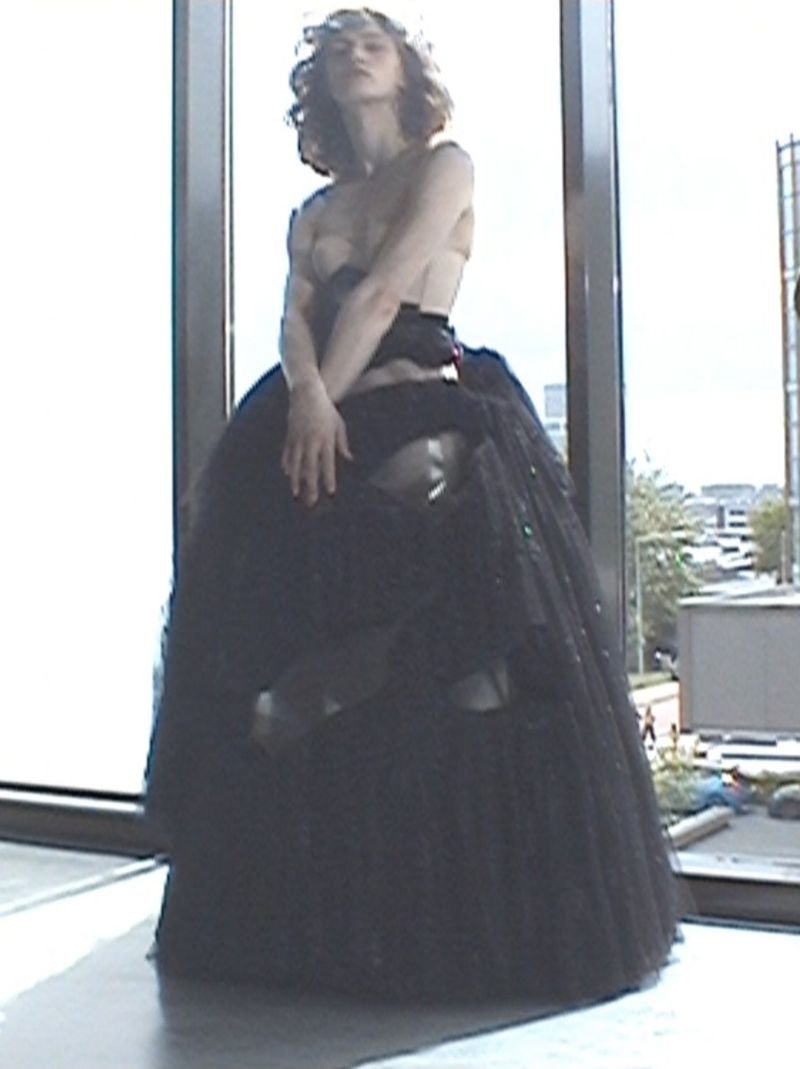
Image by © Sharna Osborne for August Barron ALL–IN Nº9
We don’t carry clouds in our heads. Imaginations are not made of silicon either. We can't map creativity, and even with a cartographic visual, we could not say “I am here” assuredly. No one is an X marking a spot or a dataset awaiting vectorisation. And artificial intelligence systems—electric brains, as Italo Calvino once described them¹—are not conscious nor made of flesh and blood. Amid amplifications of these differences, deepening entanglements between mortals and machines demand our attention, and deserve our curiosity.
“I would therefore say that it is still an entirely lyrical instrument, serving a typical human need: the production of disorder,” Calvino once wrote of mechanical entities producing creative outputs. “The true literature machine will be one … that will produce avant-garde work to free its circuits when they are choked by too long a production of classicism.” No one aligns on the needs AI serves today; we likely never will. But Italian artist Francesco D’Isa has expanded his practice with emerging technologies, untangling the beastliness of ideologies that taint tools one experiment at a time.
Claiming your place in times of tumult
Kathryn Carter: How would you prompt generative AI to introduce Francesco D’Isa?
Francesco D’Isa: I’d ask it how and why I explore both writing and visual arts. When I am between artists, I am the writer or philosopher. And when I am between philosophers, I am the artist. So I am never at home.
Kathryn: Generating art and literature with computer programs is a charged topic. The capabilities of large language models (LLMs) are impressive, yet AI systems are also sometimes described as threats to creativity². What’s your position?
Francesco: My position here is quite clear and without any doubts. I’ve worked in the creative field since before AI. And now when I work with AI, I don’t feel less creative. As for creative use, it is a tool; it does not change my creativity, my own experience. Every form of human creativity is tool-assisted somehow. In the visual arts, but also in writing. Language, of course, is a tool. When we were born, we find language, we don’t invent language. We find a complex tool with its own agency, and we are born to be inside this language. We manage to navigate inside it, to use it, to live inside it. But we feel that we are creative when we write, even if language is not our creation.
Kathryn: Journalist Nanci Nott recently wrote³: “Some people see AI as a tool for democratising creative and technical disciplines. Others hear the rasp of a cultural death rattle.”
Francesco: I disagree with both points. AI is something that is bigger than us, born from language and also visual language, media language and so on, but nothing has changed a lot for creativity, because creativity is, in my opinion, more a matter of choices. Only you know how to choose your path to something. The machine is never alone. You are the creative human being behind it.
Kathryn: Even so, many continue to suffer psychosocially. Both due to the appetite for substituting humans with systems and as a result of the psychological impacts of engaging with humanised LLMs. What would need to happen for AI to become a mechanism of greater empowerment?
Francesco: The answer here is quite complex. AI systems are massive tools, much like the internet, and asking how we can defend ourselves from them is like asking how to defend ourselves from the internet. AI and the internet are not just tools, they are habitats. We live and will live inside them. They have dangerous areas and beautiful ones, but both the merits and dangers are diverse.
Kathryn: A 2025 study⁴ on how human behaviours shape psychosocial effects of chatbot use found that “those with stronger emotional attachment tendencies and higher trust in the AI chatbot tended to experience greater loneliness and emotional dependence, respectively.” Researchers thus called for “further research on whether chatbots’ ability to manage emotional content without fostering dependence or replacing human relationships benefits overall well-being.” What’s your take on findings such as these?
Francesco: It is like saying the internet is bad for those with mental illnesses ... obviously. But I wouldn't shift the blame to the tool itself from the pre-existing causes, which can clearly exacerbate symptoms.
Kathryn: Pre-existing causes of economic inequality are also being overshadowed by rhetoric blaming job insecurity on unconscious AI tools as opposed to human decision makers.
Francesco: It is not a problem if jobs change with technology—that is normal. The problem is who loses their job, and that is where social safety nets are needed, rather than pretending machines don’t exist. If something can be automated, it will be automated. The issue is that we should support those who lose their jobs with subsidies and reintegration.
Kathryn: Some argue that job losses impact individuals not only economically, but also by shaking their sense of identity, which is curious in itself, the idea that a person is defined by a profession.
Francesco: I find the idea that humans realise themselves through work to be toxic. I prefer not to work and to have the time and money to dedicate myself to what enriches me, by my own choice, not for employment. However, the hypothesis of AI doing all the work instead of us remains, for now, mostly sci-fi.
Trusting your voice in crowds of machines
Kathryn: Hungarian media artist Vera Molnár once said⁵ “my goal is not at all to use a computer, I don’t care about computers, but the computer is like a slave in making my dreams a reality. My imagination, if you will.” As an artist who works closely with generative AI systems, how would you describe your relationship to the tools you’ve incorporated into your practice?
Francesco: I will say I agree of course with the fact that it is a tool for me. I don’t care that it is a computer, but I don’t like the word slave.
Kathryn: Pleased you said that; the word stood out for me too. It releases an unsettling energy.
Francesco: Yes, I don’t like it, even for tools, because I don’t like the mood of this word in my mind. I would describe generative AI as a habitat, an ambient, a place where I am. Technology is the place where I am while I am working. If something changes in your atmosphere, you change as well, there is a mutual connection between the tool and yourself.
Kathryn: Sometimes even the weather influences the words we write, the prose that emerges.
Francesco: Yes, this connection is strong even with simple tools. A brush is less autonomous than a computer, but there’s still a tie. You are not just yourself, you are yourself with the tools … [and with] other people. When we are talking I am thinking, of course, and now it’s my turn to speak. But what I am saying is connected to what you asked and what you’ve said before. What is born is not just from me, it’s not just mine or yours, my opinion is more, sort of, an extended mind between us.
Kathryn: On the influences of ideas, the Italian artist Filippo Tommaso Marinetti is a controversial figure in art history. His 1909 'Manifesto of Futurism' announced, quite colourfully, the futurist desire to liberate art from its old constraints⁶. ‘We declare that the splendor of the world has been enriched by a new beauty: the beauty of speed,’ he writes. Beneath the surface, however, Fascist threads were influencing the ideologies of Futurism, and vice versa⁷. Do you think parallels can be drawn between the early 20th-century social movement and the dominant tech powers of today?
Francesco: It’s an interesting question. I would say both yes and no. Yes, because some artists do have a fascination with technology today. And there are also authoritarian and fascist forces influencing AI. Musk and Zuckerberg—even people who claim to be good like Dario Amodei of Anthropic—they’re certainly not the good guys, in my opinion. So, this is a problem. But there is an interesting difference between the current environment and the early 20th-century. Futurism as an artistic movement came from below, from artists who had an interest in new technologies. They wanted to change the old; only later did they become fascinated with fascism.
Kathryn: That’s true. Futurism the artistic movement began to emerge prior to political ideologies getting so heavily involved⁷. Today we don’t observe the same allegiances made between artists who use digital technologies and the companies who are leading the trajectory of tech.
Francesco: Artists who use AI today are almost never on the side of either those who produce it or those who govern it. On the other hand, you don’t have to like the people who create a technology in order to use (and, why not, even love) the technology itself. I’m opposed to technological determinism: while a technology is certainly shaped by its social context and by those who produce it, it often goes far beyond their intentions, sometimes by a considerable margin.
Kathryn: The English literary theorist Terry Eagleton once wrote⁸ that "historical determinism is a recipe for political quietism." Exploring forces that sit in ideological asynchronicity is often just as crucial as we strive to define what we do believe in.
Francesco: Exactly, exactly. And also fascism was an ambiguous movement at the very beginning. Fascists tried to change the world, and to change the world is not always bad. The problem is how to change it. Fascism in the 20th century was orchestrated very badly, of course, but it started from the idea that “we have to change something”, and that was good because there were problems.
Kathryn: Italian Fascism apparently promoted a corporatist economic system intended to resolve class conflict through collaboration⁹. When you read historical facts like that, you can potentially understand why the Fascist movement’s membership numbers had soared by 1921.
Francesco: There was something social to Fascism, especially in Italy. But now it’s different because techno-fascism comes from above. The elite have their own philosophies—such as longtermism, singularitarianism and transhumanism¹⁰—but the people do not like these views, they are shared only by the rich. So the artists who use the technologies of today are not fascinated with the philosophy of this techno-fascism. In fact, they are usually against this philosophy.
Kathryn: So like early Futurists, artists who are optimistic about technologies today feel it has an inherent power to change the world. But unlike the days of original Futurism, our climate offers no political thread that resonates with the desires of artists? Because techno-fascism is out of touch?
Francesco: Yes, the common ground is the will to change the world. But there is no political movement moving in parallel with artists currently embracing technology. I don’t know any artists who like tech bros, but many futurists liked Mussolini. This is an important difference, in my opinion.
Expanding creative processes with tech
Kathryn: Speaking of artists embracing technology, what first called you to creating so reflexively with digital systems?
Francesco: It’s quite a natural process. I didn’t study art, I studied philosophy. I’m not trained as a painter or a drawer. So I found digital systems when I was quite young, the computer was one of my first tools. I personally don’t like putting my hands in materials to get what I want, I just want to project what I have in my mind into something visible.
Kathryn: The French philosopher Hélène Cixous once wrote “that one can only begin to advance along the path of discovery, the discovery of writing or anything else, from mourning and in the reparation of mourning.” She likens the gesture of writing to the experience of disappearance¹¹, “to the feeling of having lost the key to the world, of having been thrown outside.” It seems you’re more inspired by the creation, the horizon, as opposed to the path of discovery?
Francesco: I just want to make my idea live in the world. I’m only interested in the process insofar as it is part of the development necessary for an intellectual journey, but I don’t assign it any value a priori. If an idea came to me perfectly formed, complete, and polished, that would be fine too—better, in fact! It’s just very rare. I’m most interested in the results and their effects, in my life as well as in the lives of observers.
Kathryn: You’re interested in the flower and where it ends up, not how it grows. You just want to make sure that the flower is seen in the world so that other people can learn from it?
Francesco: Yes, exactly.
Kathryn: In her piece 'On Defining Art: A Quasi-Definition of Works of Art', philosopher Tiziana Andina writes¹²: “An artwork is a social object, an artefact, which embodies a representation, in the form of an inscribed trace upon a medium that is not transparent.” Do you feel we need new definitions for art generated by LLMs?
Francesco: I don’t believe in general concepts, especially with art. We need a new definition of art for every artwork. For every artwork and every spectator who sees the artwork, as well.
Kathryn: A unique definition for every experience of art?
Francesco: For every artwork and for every human being watching this artwork, you need a new definition of art, in my opinion, if we’re being really precise. I believe it’s the most difficult definition in the whole world, is art.
Kathryn: Indeed, even Leo Tolstoy once wrote¹³ that “art is becoming something more and more vague and uncertain to human perception.” How do you describe the metamorphosis you experience as an artist committed to unbridled experimentation with emerging technologies?
Francesco: There’s been a huge change in my work. I don’t want to seem too much like an enthusiast about AI, because it raises lots of problems. But I believe that the problems are not related to creativity.
Kathryn: So contrary to some theories, your imagination does not feel endangered?
Francesco: To be honest, none of the research I’ve read has shown that AI impoverishes creativity; sometimes studies that actually say something quite different are presented as if they did.
Kathryn: A lot of academic research is contradictory. Capitol Technology University claims that¹⁴: “despite its benefits, AI poses real risks to human creativity.” Some feel that because AI lacks intuition and emotion, over-reliance on LLMs can lead to homogenised outputs, “where originality and depth is sacrificed for efficiency.”
Francesco: It’s difficult to conduct this kind of research, since creativity isn’t easy to measure and it’s still too early to draw firm conclusions. That said, all the technologies that were supposed to impoverish creativity in the past have failed to do so [in my opinion], and I suspect the same will be true of artificial intelligence. AI tools have empowered everything within my brain. Now when I have an idea, I can discuss it with a machine; I can refine my ideas again and again.
Making with abandon in the AI landscape
Kathryn: Much research now focuses on relationships burgeoning between bots and human beings. What role do these interactions play in your artistic practice specifically?
Francesco: I feel less bored. Because I’ve always struggled finding interesting people in my life. AI is not people, but it delivers language speaking with a lot of knowledge. When I was younger, I was striving for an AI to speak with. I can’t understand people who are scared for their brain with AI. Why would you have to be scared? Of course, LLMs can be wrong, and are wrong a lot of the time. But humans also get things wrong, often much more than an AI does.
Kathryn: Quantities of rightness and wrongness aren’t my area of expertise. There are also all sorts of kinds of intelligences—many ways of being right or wrong or neither. And some wisdoms held by humans cannot be computed by software programs at all. Evidently, the disruption of AI is felt uniquely and often unexplainably by each of us.
On that note, French poet Guillaume Apollinaire once said¹⁵ that ”without poets, without artists ... everything would fall apart into chaos.” Some artists today seem to want to “fix” issues amplified by techno-fascist ideologies, others are commenting from the periphery. What role do you feel artists play in the current climate?
Francesco: I don’t like the idea that with art you have to fix something. Usually when art tries to teach something, it gets a little boring, because you have to lose the ambiguity. The only reason why I am interested in art is to save myself, and hopefully other people. With art, you have to save yourself from the world and from suffering, you have to cope with reality. There is no other reason for art aside from saving yourself and others.
Kathryn: There’s a higher purpose to practices that can feel arbitrarily driven yet divinely guided.
Francesco: Yes, the novelist and philosopher Iris Murdoch once said that every art is religious, and I agree with her. Because I believe that art and region have the same aim.
Kathryn: Participating in both involves transcendence, I suppose? Undefinable transcendence.
Francesco: Exactly.
Kathryn: I agree that art is not about fixing things, but today it can feel like overt activism. Art has always been political, but as writer Gregory Sholette has observed¹⁶, many artists now transform their practices into forms of highly focused protest. Forms of art-activism that have emerged from the ‘80s are “focused less on seeking broad political transformation or establishing a progressive alternative counterculture, than on targeting highly specific social issues,” Sholette says. For art to be imbued with meaning—with a message—is essential and inescapable, of course, but some contemporary pieces can feel forced and specific. Agendas sometimes overpower the art itself.
Francesco: I agree, you can have an agenda, you can advocate for something with art, but it has to be not the main reason but a consequence of art. Every art is politics, but you have to not push your art for that reason. You have to just do art and then it will be politics, the political part of a consequence of the first part, which is to understand the world and then save yourself and other people. There’s something higher than our lower ideologies involved. Ideologies are useful in order to make things better, sometimes, but they can also be monsters, such as fascism. In the beginning, fascism was a way for many people to try to make a better world, they were simply wrong [in their approach].
Kathryn: To make change with art thus involves not ideologies, but rather, metaphysical forces perhaps? Fertilising transformation with energies we cannot see or rationalise or touch?
Francesco: I prefer to go to the roots. There are ethical and political consequences, but with art I start with the metaphysical first, something closer to the root of reality, if there is such a thing.
Kathryn: “Reality doesn't impress me,” Anaïs Nin once wrote¹⁷. “I only believe in intoxication, in ecstasy, and when ordinary life shackles me, I escape, one way or another. No more walls.” On that note of abscondence, of fleeing for some place else, what do you want for the future?
Francesco: I tell the truth, I don’t have a vision for the future because the future is complicated. From a historical point of view, I think this time will be quite bad, as usual in human history. But from, let’s say, a more spiritual point of view, it can be good, probably. Because it’s rare, but sometimes we manage to transcend ourselves, sometimes. At the end of the story, it’s always the same, we die. In the meanwhile, we have a really short time for making a mess in the world, so that’s the good part. Our personal part of history is not the most important thing for human beings to remember.
Kathryn: British artist Mina Loy writes: “There is no Space or Time / Only intensity.” Your reflection reminds me of her words¹⁸. Perhaps living intensely, with integrity, in the moments we do share is what will shape the future that some of us can’t quite see yet. We can’t map it, but we can manifest how we want it to feel, maybe, by virtue of how we treat one another.
Francesco: It’s very difficult, there are too many variables to predict specific things. If you want specifics, you just have to look at the past and can mostly know we’ll make the same mess again. What I prefer to focus on is our life. If mine ended tomorrow, I can say that during its span there were just a few seconds they were very, very important. Minutes, let's say. But these minutes are enough. Our lives are short, but it’s not important how long they are, it’s important that they have intensity, quality. Observe the little things that are very, very intense. They are enough.
-
'Cybernetics and Ghosts' by Italo Calvino. Lecture delivered in Turin and other Italian cities, November 1967. Available in print via The Literature Machine — Penguin Publishing Group
'Is AI a Threat to Human Creativity?' by Madoc Wade via Institute for Ethics in AI
'Artists can help us fight AI’s existential threats' by Nanci Nott via ArtsHub
'How AI and Human Behaviors Shape Psychosocial Effects of Extended Chatbot Use: A Longitudinal Randomized Controlled Study' by Cathy (Mengying) F. , Auren Liu, Valdemar Danry, Eunhae L., Samantha W.T. Chan, Pat Pataranutaporn, Pattie Maes, Jason Phang, Michael Lampe, Lama Ahmad, Sandhini Agarwal via Massachusetts Institute of Technology
'Vera Molnar in conversation with Hans Ulrich Obrist' via Vintage Galéria feat. interview with Hans-Ulrich Obrist of Serpentine
'Manifesto of Futurism' by Filippo Tommaso Marinetti. Published on front page of the French newspaper Le Figaro on February 20, 1909.
'How Italian Futurism Influenced the Rise of Fascism' by Jad Dahshan via artmejo
Why Marx was Right by Terry Eagleton via Yale University Press
'The TESCREAL bundle: Eugenics and the promise of utopia through artificial general intelligence' by Timnit Gebru and Émile P. Torres via First Monday
'Scene of the Unconscious to the Scene of History: Pathway of Writing' by Hélène Cixous. Available via The Hélène Cixous Reader edited By Susan Sellers
'On Defining Art: A Quasi-Definition of Works of Art' by Tiziana Andina via The Brooklyn Rail
What is Art? by Leo Tolstoy, first published 1898. Available via Penguin Australia
'Is AI Good or Bad for Creativity: How Generative AI is Transforming Human Ideation' via Capitol Technology University
Poem
'The Paradox of Art-as-Activism' by JJ Charlesworth via ArtReview
Incest: From "A Journal of Love": The Unexpurgated Diary of Anaïs Nin, 1932-1934 by Anaïs Nin
The Lost Lunar Baedeker by Mina Loy via Farrar, Straus and Giroux
-
Photographer | Sharna Osborne
Stylist | Danny Reed
Hair and makeup | Kathinka Gernant
Casting director | Julia Lange
Models | Ilya Vermeulen + Katherine Vinten
Publication | August Barron ALL–IN Nº9
Client | Viktor & Rolf
Quisque iaculis facilisis lacinia. Mauris euismod pellentesque tellus sit amet mollis.