How OuLiPo poets help you ponder "AI"
Earth orbits the sun without AI, it's not essential to our survival. Still, hype incites us to consider "artificial intelligence" daily. Chosen by computer scientists in the '50s, the term implies that we can hardcode intellect. Many agree, anthropomorphising non-sentient systems. Others believe "AI" is a hollow idea hazily defined. Some aren't sure, a reasonable position given the ever-shifting rhetoric dooming and booming in a dizzying cycle.
To warp the shape of the AI hoopla, looking beyond the tech broligarchy—and past large language models (LLMs)—helps blossom new perspectives. This is where the OuLiPo collective can assist. Long before "bot" entered the vernacular, a group of writers and mathematicians began to merge imagination with arithmetic. Their legacy reopens windows of contemplation for anyone philosophising dynamics between tech and the human touch.
Be the discoverer amid the "thinking" machines
OuLiPo is short for Ouvroir de Littérature Potentielle (Workshop for Potential Literature)¹. Formed in France in 1960 by poet Raymond Queneau and mathematician François Le Lionnais, the group was made up individuals from diverse disciplines, all united by the hypothesis that restrictions may "enhance artistic expression rather than stifle it."
Quasi akin to the mechanisms of LLMs that rely on advanced statistical pattern recognition, Oulipo writers "often employed mathematical and puzzle-like constraints in their work," Mark Dziak writes². The spirit of OuLiPo rejects the subconscious as a sole source of creativity,¹. Instead, it explores "systematic, self-restricting means of making texts."
Oulipian production and generative AI thus share something yet also nothing in common. OuLiPo writings feature purposeful linguistic limitations, often set out the same way one might map an equation. LLMs also rely on rule based systems, tokenising words into numbers before generating outputs. Both the OuLiPo writer and the LLM thus combine elements from language and mathematics, but the former thinks while the latter calculates. Members of OuLiPo pursue two principal directions of research: analysis and synthesis, endeavours that require the consciousness that LLMs are lacking.
As François Le Lionnais writes in 'La LiPo: Le premier Manifeste'³: "Anoulipism is devoted to discovery, Synthoulipism to invention. From the one to the other there exist many subtle channels." Early Oulipian activity therefore demonstrates that we've been exploring how mathematical and imaginative disciplines can inform one another for decades. The OuLiPo writer teaches us that the human in the one who discovers, however, not the algorithm. Your AI tool can calculate data, but only you can dream.
Participate don't (absentmindedly) prompt
When you learn to write, you're not taught to be led by your pencil. Contrarily, when we open generative AI tools, we're invited to relinquish our processes to LLMs. Anthropic—at time of writing—spells this out on its website⁴. "Hand Claude a task, not just a question," the company proposes. "Tackle routines, tangled ideas, and big projects." Many people report huge value in such applications, outsourcing diverse agenda items to AI. But surrendering thinking to systems does give rise to risk. You may save time, and produce more polished outputs, but personal touches could be compromised.
Designed to simulate speech, AI tools are touted as entities that can be entrusted to "think" and "reason" for us. What we must remember is that they can't simulate meaning. "At its core, an LLM performs a surprisingly simple task: predict the next token—a word or part of a word—in a sequence based on everything that came before it," Kelsey Miller explains⁵.
"Despite these capabilities, LLMs don't understand language the way people do. They don't have beliefs, lived experience, or a built-in ability to distinguish truth from falsehood."
In a world fixated by the synthetic intellect of strictly predictive systems, OuLiPo writers remind us that human deviations are the elements that animate computational thinking. Oulipian works are characterised by self-imposed restrictions, but also by very deliberate digressions from such constraints. Such swerves are led by the self, never by machines.
To break the symmetry is necessary, French novelist Georges Perec once wrote, "because when a system of constraints is established, there must also be an anticonstraint within it. The system of constraints—and this is important—must be destroyed."
By outsourcing your process to an LLM, the ability to manually manipulate work is lost, because algorithmic rules can't be readily bent or broken. You can refine a prompt, but you can't remain in control of deciding, and demolishing, your system of thought with AI. Before "handing a task" to a tool for unconscious completion, consider to what degree you project calls for your human (Oulipian) touch.
Embrace computer aided imperfection

When developing an OuLiPo system of constraint, Perec notes: "It must not be rigid; there must be some play in it; it must, as they say, "creak" a bit." Unlike computer programs, the self-restricting means of making texts employed by OuLiPo writers were not necessarily supposed to be completely coherent. The collective's puzzle-like constraints were core to their experimentation, but so too were the clinamen within texts.
In Epicurean atomic theory, the clinamen atomorum means the swerving of atoms within their otherwise deterministic model. In Oulipian writing, the veer is the very thing that keeps the text alive. As Italo Calvino once proposed, "the computer, the scourge of the aleatory, must be placed at the service of the clinamen." Working with computers, the Italian novelist believed, allows the artist to be liberated from "the slavery of a combinatory search." This gives them "the best chance of concentrating on this 'clinamen' which, alone, can make of the text a true work of art."
The non-deterministic nature of LLMs feature deviations too, of course. But sitting next to someone who unexpectedly rips a page out of your book, without asking if you want it to be ripped out first, is not the same as ripping the page out for yourself. As Epicurus taught us, atoms swerve to their own beat, they don't take cues from algorithms. When we resist the idea that an LLM can be left alone with our work, we stay in sync with our own rhythm.
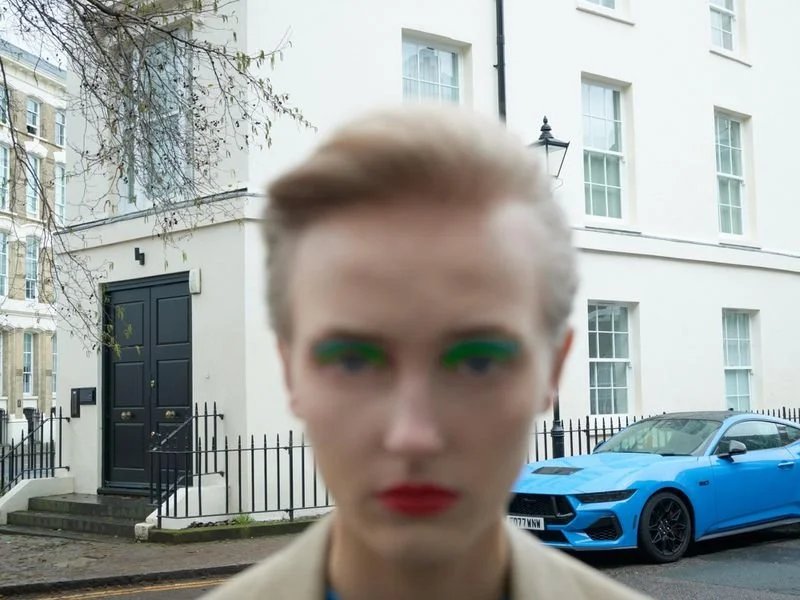
Dedicated to discovery, OuLiPo poets remind us to be led by curiosity, not computers. The anthropomorphism of AI fuels the illusion that LLMs can do things on your behalf, but Oulipian texts exemplify the essentiality of the human touch. Welcoming of both writers and mathematicians, OuLiPo was able to explore the potential of literature uniquely. Our current terrain, chaotic as it may seem, offers arable soil for similar experimentation. Looking past the polarising narratives of tech hype, we can hold space for interdisciplinary perspectives.
A definition of OuLiPo proposed by the group in its early days may offer hope for those who want to explore the potential of literature—and all else—beyond the bedlam of big tech. In their own words, Oulipians are "rats who must build the labyrinth from which they propose to escape." No matter how lost we feel, poetry can pull us towards the splintered light.
-
Oulipo (Group of authors) by Mark Dziak
OULIPO 101: Understanding François Le Lionnais' First Manifesto via University of Pennsylvania
What Are Large Language Models (LLMs) & How Do They Work? by Kelsey Miller
Oulipo: A Primer of Potential Literature via Internet Archive published by University Of Nebraska Press
-
George in Clerkenwell for Middle Plane Magazine
Photographer | Alessandro Furchino Capria
Fashion editor + stylist | Jodie Barnes
Hair stylist | Shiori Takahashi
Makeup artist | Thomas De Kluyver
Casting directors | Nico Mao + Rachel Chandler
Model | George Anderson
Quisque iaculis facilisis lacinia. Mauris euismod pellentesque tellus sit amet mollis.