Does big tech dream of Jeannie?
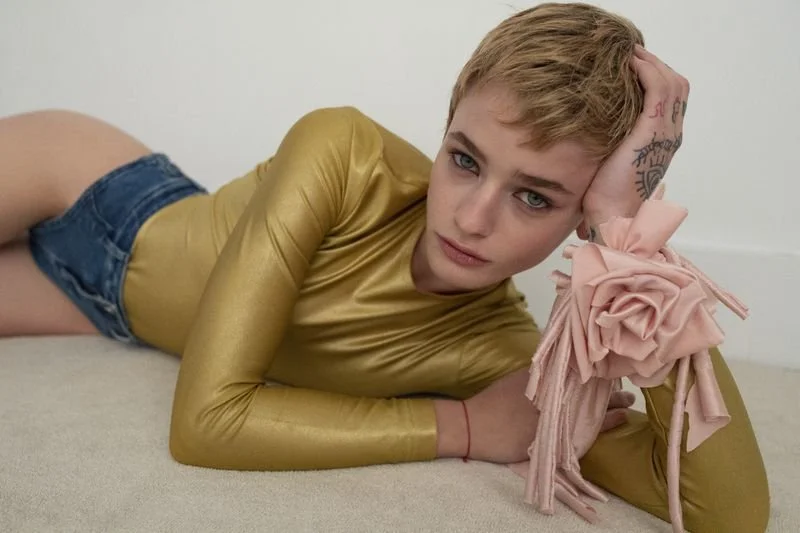
Esther Mcgregor by © Nick Sethi for MARFA
Large language models don't live in little bottles. But "AI" can be compared to Jeannie, a woman who does call a bottle home¹. She may be fictional, but her role in the life of Captain Tony Nelson is akin to the role big tech wants "AI" to play in the lives of all. He is "master" and Jeannie is his devotee, a position now increasingly filled by digital companions.
We're not taught to prompt in wishes, but non-sentient tools are marketed as magic. AI can compute cleverly, but it can't conjure. Positioning tools are subservient spirits implies that AI can command desires—dark and light—to materialise, and that's dangerously deceptive.
Watching old episodes of I Dream of Jeannie won't improve "AI" literacy. But it may help us analyse the ideologies that underpin particular applications of artificial intelligence. Just because big tech treats software as supernatural, doesn't mean we should.
LLMs do maths (amazingly) not magic
In her hit song 'Genie in a Bottle', Christina Aguilera claims² that she can "make your wish come true." AI companies don't spell out the same promise, but it's somewhat implied. In a 2024 paper³, researchers introduced the term “conjuration of algorithms” to describe how the tech industry uses the language of magic to shape people’s perceptions of algorithms. In the words of coauthors Peter Nagy and Gina Neff:
"Algorithms are governed by codes, infrastructures, and data. They follow instructions and execute orders. And yet, when talking about what algorithms are and what they do in the world, people often refer to them as magical entities beyond human understanding, that can seemingly break the normal physical rules of the world and achieve miraculous feats."
Such perceptions didn't happen organically, they were crafted. The tech industry uses the language and images of magic to present algorithmic systems to the public, Nagy and Neff explain. This had led many to treat generative AI tools the same way Tony treats Jeannie, as enchanting beings capable of wondrous (and worrisomely sinful) endeavours. Naturally, not everyone feels this way, but the idea that AI can, to borrow from Christina Aguilera, "make your wish come true," continues to be pushed by the industry at large.
The core relationship dynamic of I Dream of Jeannie has thus been xeroxed by AI leaders. Generative systems are sold to consumers as tools that can be what Jeannie was to Tony. Not only is this misleading, it's arguably corruptive. The meaningful use of technology is commendable, but that needn't require anyone to role play as a chatbot's master.
Generative AI is not your genie

"Before there was technology, there was magic," author George M. O'Har writes⁴. "It was not so long ago, indeed, that the scientific and industrial revolutions pushed magic aside." We're still exposed to fantasy today, but the focus is more on AI simulations, not spirits.
Naturally, not all simulations are inherently bad; a lot of software serves us well. In the words of the late MIT professor Joseph Weizenbaum⁵: "the list of ways in which the computer has proved helpful is undoubtedly long." Even so, he believed that we should never "propose to substitute a computer system for a human function that involves interpersonal respect, understanding, and love."
Today, however, such substitutions are everywhere, justified by the belief that programs such as LLMs are capable of far more than just logic. In the words of Sam Altman⁶, AI is the "incredible magic of intelligence in a bottle." This seems reasonable to some and ridiculous to others. No matter your opinion of AI, it pays to think carefully about when and why you let the tech into your life. As I Dream of Jeannie demonstrates, even the clearest of wishes can be misinterpreted. The danger of distortion is arguably escalated with generative AI, given its non-sentient nature—it's impressive but void of intuition.
Concerns here aren't related to code or capability, but to the heart. When Weizenbaum cautioned us against replacing human functions with computers, he spelt out why. "It has nothing to do with what computers can or cannot be made to do. Respect, understanding, and love are not technical problems." AI can mimic language, but it can't love.
We can make our own wishes come true
It's unlikely you live in a little bottle. And not many of us enter rooms in clouds of smoke. But we can be all be genies—for ourselves and one another—without AI. Taking on this role doesn't mean refusing to apply the tech to tasks well-suited to computers. It means remembering that non-sentient systems aren't at all suited to many parts of life.
"Faust conjured spirits to give himself knowledge and power," William A. Stahl writes⁷. "In our century, we press buttons to do the same." This didn't begin with the rise of generative AI, but its hype averts our attention away from authenticity towards artificiality. Amid the mania, Jeannie reminds us of a time when wishes were consciously made and magically granted, not tokenised and generated. The lesson here is not to choose one supernatural archetype over another, but to appreciate the contemporary shift from spirits to software.
"When we find the language of magic in media discussion of computers and related technologies, we have to ask what it means and why it is there," Stahl proposes. Accelerations in tech development don't often accommodate quiet reflection, particularly when new tools are thrust upon us. But being a Tony to a chatbot is never the only option.
Your views on whether generative AI is capable of magic or malarkey—or perhaps something else entirely—will likely continue to evolve over time. In the interim, you don't need Christina Aguilera or an AI companion to make wishes come true—we can learn a lot by sharing them with each other. As Russian playwright Anton Chekhov reminds us⁸:
"Formerly, when I would feel a desire to understand someone, or myself, I would take into consideration not actions, in which everything is relative, but wishes. Tell me what you want and I'll tell you who you are."
-
'Genie in a Bottle' by Genie in a Bottle via Genius
'Conjuring algorithms: Understanding the tech industry as stage magicians' by Peter Nagy and Gina Neff via Sage
'Magic in the Machine Age' by George M. O'Har featured in Technology and Culture journal. Vol. 41, No. 4 (Oct., 2000). Published by The Johns Hopkins University via JSTOR
Computer Power and Human Reason: From Judgment to Calculation by Joseph Weizenbaum
'Hundreds protest G20 event at UNC-Chapel Hill as tech billionaires talk progress' by Jane Sartwell via The News & Observer
'Venerating the Black Box: Magic in Media Discourse on Technology' by William A. Stahl featured in Science, Technology, & Human Values, Vol. 20, No. 2 (Spring, 1995) via JSTOR
Selected Stories of Anton Chekhov by Anton Chekhov via Penguin Random House
-
Esther Mcgregor by © Nick Sethi for MARFA
Photographer | © Nick Sethi
Stylist | Andrew Sauceda
Makeup artist | Kiki Gifford
Hair stylist | Dylan Chavles
Casting director | Simone Schofer
Model | Esther Mcgregor
Publication | MARFA
Quisque iaculis facilisis lacinia. Mauris euismod pellentesque tellus sit amet mollis.