Are you more free in the cereal aisle?
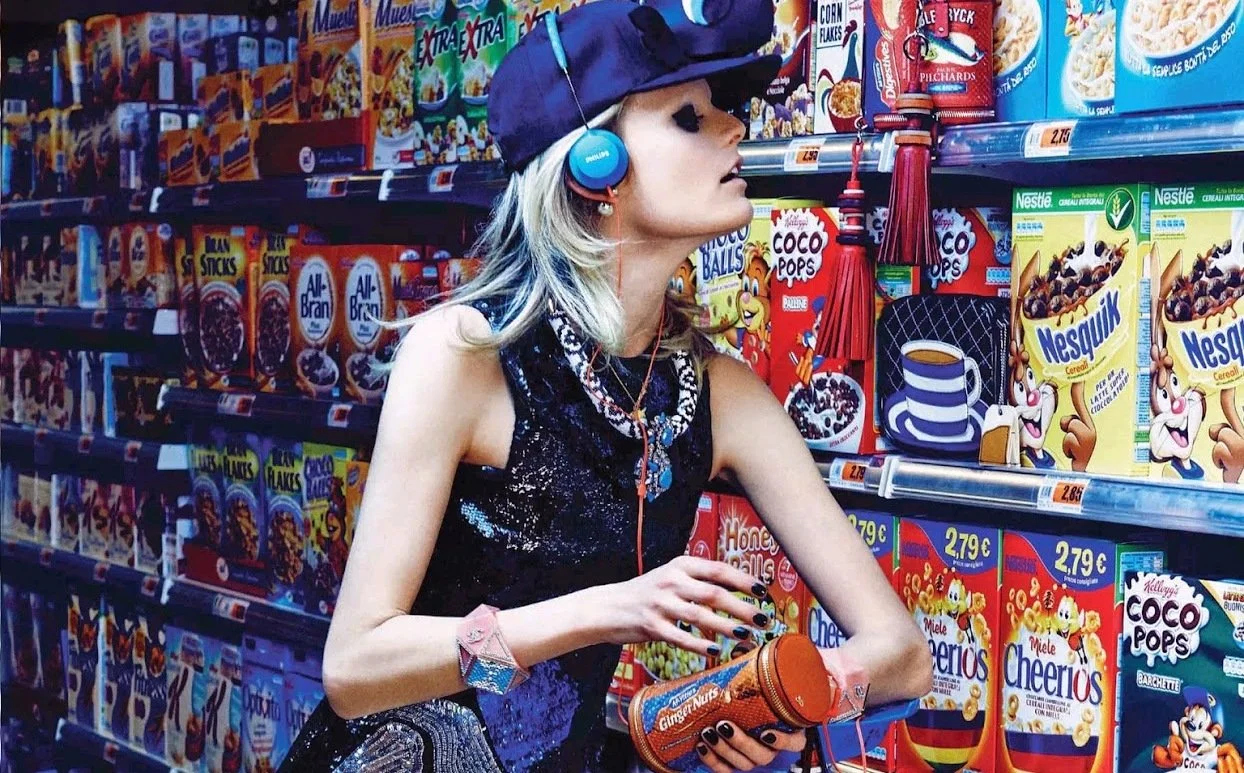
‘My Market Day’ by © Giampaolo Sgura for Vogue Japan
Bosses don't write shopping lists for employees. But decision-making powers wielded by many at the supermarket are dwindling at work. Because when employers mandate AI adoption, people lose control over their intellectual processes.
The freedom to do tasks our own way is eroded by expectations to apply AI at scale. Adding insult to arguable injury, 60% of Australian workers have found errors in generated outputs¹. Tech upgrades are ordinarily judicious, but decreeing "AI" can compromise integrity.
Protecting cognitive autonomy is thus imperative in environments that demand interactivity with largely language models (LLMs). In the cereal aisle, we're free to choose between healthy options or sugary pleasures. Software ought to be selected with the same level of liberty—consciously, not by force. Because it serves us, not the system.
Be the Snap, Crackle and Pop of your process
You can't pick up a box of Kellogg's® Rice Bubbles without seeing Snap, Crackle and Pop. Perusing deliverables generated by LLMs at work is different. Immediate associations with particular people are harder to make when individual styles are diluted by AI. With conscious and ethical AI practice, this can be avoided, but such techniques take time to finesse.
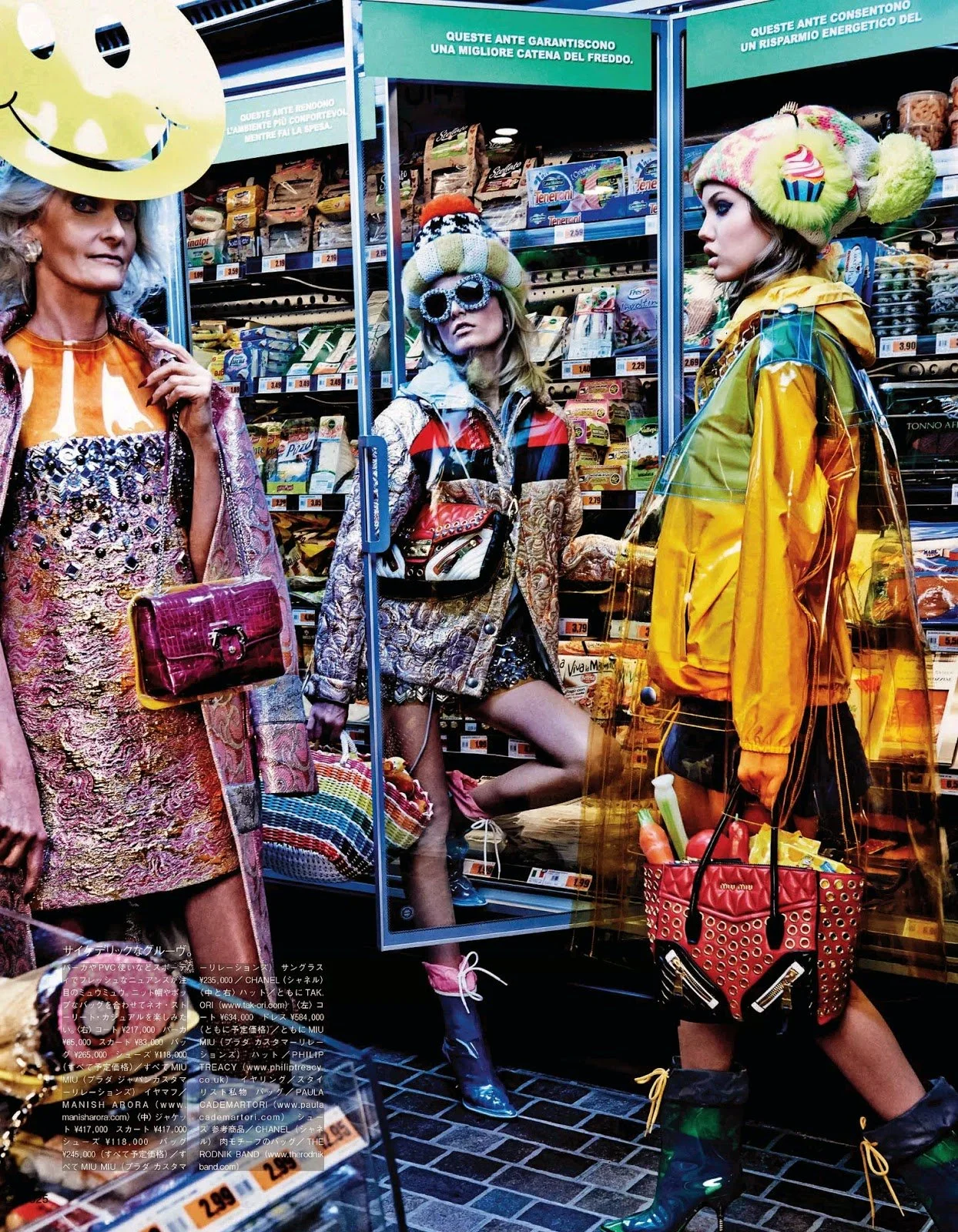
‘My Market Day’ by © Giampaolo Sgura for Vogue Japan
If we want to be to our work what Snap, Crackle and Pop are to Rice Bubbles, we must maintain the freedom to employ generative AI only when it makes sense to do so. As it stands, capabilities are often plugged in to workflows without employee consultation, leaving people feeling pressure to change their ways at pace.
Luke Plunkett—co-founder of the website Aftermath—describes this as an overwhelmingly negative and demoralising force³. In his own words: "We’re a few years into a supposed artificial intelligence revolution, which could and should have been about reducing mundane tasks and freeing everyone up to do more interesting things with their time.
Instead, thanks to the bloodthirsty nature of modern capitalism and an ideological crusade being waged by the tech industry, we’re now facing a world where many people’s livelihoods–like video game developers–are under direct threat."
Plunkett reached this conclusion after speaking with a collective of artists, game designers, and software developers. "Many artists remain firm in their resistance to AI technology that devalues their work, and are championing human creators in the face of it," he observes. This strongly demonstrates the desire of wanting to orchestrate one's own rhythm, undisrupted by tools ill-suited to workflows.
You don't have to have your Weetabix
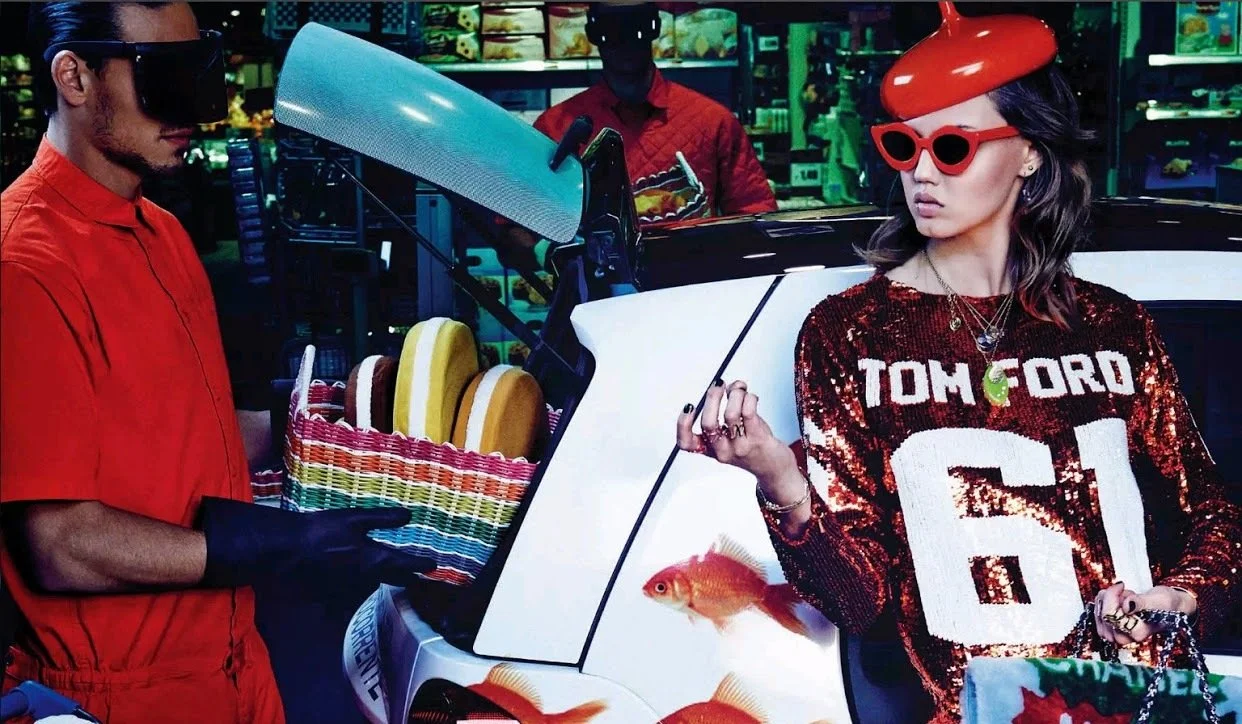
‘My Market Day’ by © Giampaolo Sgura for Vogue Japan
In September, Inc. Magazine published the following headline⁴: "60 Percent of Employees Feel Pressured to Use Workplace Bots. The Errors Are Piling Up." The article explores three recent studies that identify "the entangled challenges" that both "employees and their companies face during this initial phase of AI adoption."
Pressure to use automation tools is "leading employees to skip accuracy checks [and] conceal mistakes," journalist Bruce Crumley writes⁴. Meanwhile, "39% of employees—including 46% of Gen Z—say relying on AI is making them less intelligent," according to a study led by GoTo earlier this year⁵.
“We’re seeing a new kind of workplace pressure: Employees feel they must use AI to avoid looking replaceable, but fear repercussions if it goes wrong,” says Dan Schawbel, managing partner of the Workplace Intelligence company that conducted the GoTo survey⁴. "That combination is exactly how you get a workforce that uses AI recklessly."
"Have you had your Weetabix?" was a British slogan designed to imply that cereal could prepare us for anything⁶. “Aussie Kids are Weet-Bix Kids” furthered that theory in Australia, suggesting that the rectangular breakfast food was a favourite⁷. "Have you had your AI?" is the professional equivalent of our age. But just as not every kid was really a Weet-Bix kid, not everyone will be an AI employee.
Artificial intelligence is not a breakfast food but it may help to treat it as such. Like any tech, AI is something that must be understood before it can be consumed well—sans error and with efficiency. It's also a tool that one should feel free to either accept of decline, in honour of your preferred processes. No one should ever be forced to have their Weetabix, nor any dose of generative AI. Not unless it's their conscious choice, and not until they're ready.
We know more about Froot Loops than foundation models
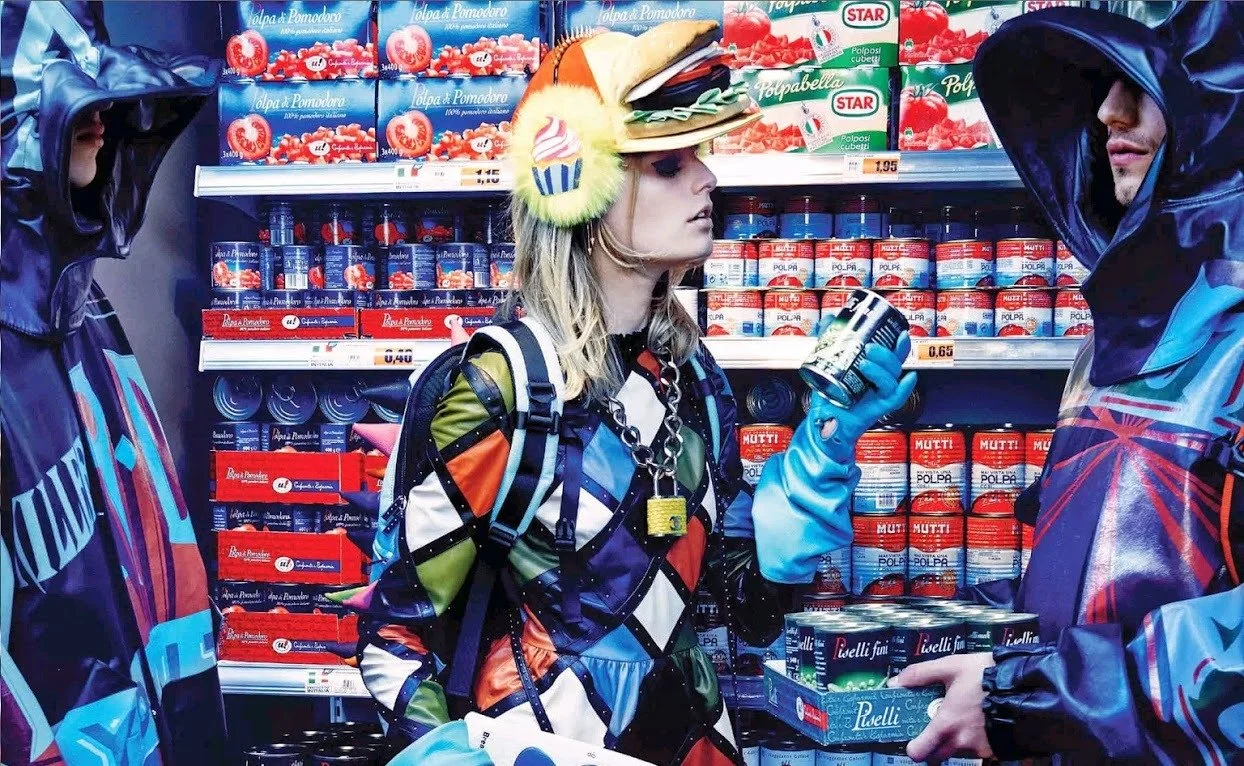
‘My Market Day’ by © Giampaolo Sgura for Vogue Japan
One serve of Kellogg's Froot Loops® contains 11.9 grams of sugar but no artificial colours or flavours⁸. We know this because the box tells us so, but no such labelled boxes exist for foundation models. As software firm dida explains⁹:
"Unlike traditional machine learning models that rely on labeled datasets, foundation models learn from unlabeled data, identifying relationships and patterns without explicit guidance."
This is impressive, but it also means we know more about what's in Froot Loops than models underpinning generative AI. According to Movement for an Open Web¹⁰: "AI foundation models' failure to disclose training data raises IP theft and disinformation concerns." This hasn't stopped well over 1 billion individuals using LLMs weekly¹¹, but as Luke Plunkett has (colourfully) reported¹², others actively resist AI.
"As more and more dipshit managers mandate (or at least heavily encourage) the use of AI in the office, more and more workers are being confronted with a choice: do as they're told and help contribute to an economic, environmental, creative and cognitive disaster, or find ways to resist," Plunkett writes. "Thankfully, plenty of folks are opting for the latter."
This is a strong stance to take and not one shared by all. That said, the resistance is rooted by genuine concerns, inviting us to consider more conscious AI integration. New tech is nice, but empowerment is key. "If I didn't define myself for myself, I would be crunched into other people's fantasies for me and eaten alive," Audre Lorde once said¹³. We all deserve to define ourselves, and our tech, pursuant to our principles, not to the prompts of others.
-
'Australian workers mistrust AI as errors hit workplaces' by Mara Sugue via IT Brief Australia
‘An Overwhelmingly Negative And Demoralizing Force’: What It’s Like Working For A Company That’s Forcing AI On Its Developers by Luke Plunkett via Aftermath
60 Percent of Employees Feel Pressured to Use Workplace Bots. The Errors Are Piling Up by Bruce Crumley via Inc. Magazine
The Pulse of Work in 2026 by GoTo and Workplace Intelligence
'Weetabix Cereal's Iconic Slogan Asks a Favour of 2021' by BBH London
'Weet-Bix brings back iconic ‘Aussie Kids’ jingle in new campaign' by Joanita Wibowo via Mumbrella
'AI foundation models' failure to disclose training data raises IP theft and disinformation concerns' by Movement for an Open Web
'Digital 2026: more than 1 billion people use AI' by Simon Kemp via DataReportal
'Welcome To The Resistance: Meet The Workers Dodging (And Sabotaging) Their Employer's AI Mandates' by Luke Plunkett via Aftermath
“Learning from the 60s” (1982) by Audre Lorde via Black PastDescription text goes here
-
‘My Market Day’ for Vogue Japan, October 2014
Photographer | Giampaolo Sgura
Stylist | Anna Dello Russo
Makeup | Jessica Nedza
Hair | Andrew Guidaon text goes here
Quisque iaculis facilisis lacinia. Mauris euismod pellentesque tellus sit amet mollis.