Adjust your own voice controls
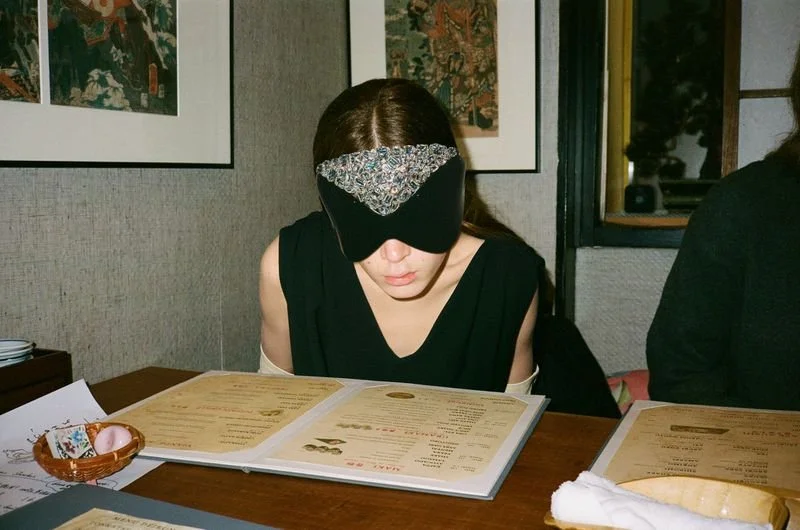
You don’t have to burn a book to bury it. In 2000, Paulina Borsook published Cyberselfish, framed as “a critical romp through the terribly libertarian culture of high tech.” The text was about tech’s impact on people and planet earth, not about computers and markets, but it was entombed by a world focused on potential and profit, not reality and risk¹. Today, the volume on critique has been amplified. Not because we don’t want tech, but because we want it to do good, not harm.
“Were I to write what I know," Ina Coolbirth once wrote², "the book would be too sensational to print; but were I to write what I think proper, it would be too dull to read.” In the noughties, Cyberselfish was evidently too sensational, but it has been reincarnated due to rising demand. A new generation of readers are now scrutinising how tech got big and how it can become better. To mark the moment, Paulina and I met to explore the subliminal cultural forces of Silicon Valley, and why it still takes courage to deviate from writing what we think is proper.
Dial in your intuition

Kathryn Carter: In late 2025, The New York Times described you³ as “the writer who dared criticise Silicon Valley.” At the time you wrote your book Cyberselfish, did it feel like an act of daring?
Paulina Borsook: I don’t think I was daring to do anything; I was just writing what I saw. You have to realise, it was a much less polarised and nasty time, so there was a long tradition of just writing what you wanted to write. Many writers did, like Susan Sontag etc. So people call me a writer who “dared” today, and I am not sure it’s wrong, but it’s not what I was feeling at the time.
Kathryn: Your approach feels akin to Joan Didion’s position as the outsider looking in. Didion spent a lifetime “chronicling the absurdities and contradictions of a complacent social order as it rapidly broke down” across parts of California⁴.
Paulina: I’m glad you said that, I think I fit more in the category of literary women writers, such as Molly Ivins and Barbara Ehrenreich. I can’t tell people why Cyberselfish died early on or why it came back. But I think part of the reason is the literary writing. If it was just a polemical political book, I don’t think people would be interested. Fiction books often become popular again, and films, but less so non-fiction texts. For non-fiction, there needs to be a literary element.
Kathryn: Reminds me of Small Is Beautiful by the economist E. F. Schumacher⁵. Economics ordinarily bore me to tears and yet I love that book, there’s almost a poetic dimension to the text.
Paulina: People forget: ideas are cheap, execution is everything. I think people have so lost sight of that because they’re on the side of efficiency. There’s a stylistic sensibility that’s been lost. On the other hand, when something strange like Cyberselfish erupts, people respond to it because they don’t come across stuff like it much anymore. I mean, that’s one of my theories.
Look both ways before you cross
Kathryn: Cyberselfish was originally published in 2000 as a warning about an emerging subculture in Silicon Valley. We don’t always write for a reason, but did you hope that the text would be a catalyst for change?
Paulina: I don’t have a very instrumental mentality. I was just fascinated by this weird subculture that nobody was paying attention to, I was curious, I wanted to explore it. I can say in retrospect I wish more attention had been paid, because it might have had an effect on what’s played out since. I can wish that it was embraced because I don’t quite think that we’d be in the mess that we’re in if people had bothered to read it. But I wasn’t writing to advance a worthy cause.
Kathryn: The book appears to have been accidentally prophetic, and it definitely seems to be inspiring a new generation of readers today⁶.
Paulina: As a writer, you want to think you’ve created something of lasted value. Now I’d like it to have a continued life now it’s back from the dead, but one could argue it’s come back too late.
Kathryn: When you began working in Silicon Valley in the '80s, you began to form, in your words: “a picture of an emergent social and political subculture, one that can seem dangerously naive and, at its worst, downright scary.” Can you expand on what made you nervous, and how the subcultures of the Valley are something we ought to be concerned with, globally, today?
Paulina: This is the curse of being an intuitive, I don’t know. I just thought it was really weird. I was probably picking up on the simmering rage I was feeling under these people—that’s an emotional reading. Some of the ideas they were latching onto, such as essentialist gender politics and self-regulation, seemed so retrograde to me. The reactionary opinions were also confusing because no sector of society has benefited more and suffered less from the government than these people.
Kathryn: In the book you write that “technolibertarians take for granted the richness of the environment they have flourished in and resent the hell out of the constraints that bind them. And, like privileged, spoiled teenagers everywhere, they haven’t a clue what their existences would be like without the bounty that has been showered on them.”
Paulina: Yes, so why are they like this? And also, the San Francisco Bay Area is splendid. We have so much open space, nature, everything that has been preserved. In other words, it’s really easy to live in this area and see what good government can be, it doesn’t take that much imagination. That’s why it was scary, despite the environment and circumstances there was a sort of fragile meanness under some of these people.
Kathryn: Do you observe or sense a similar simmering rage beneath some of the big tech leaders who are increasingly publicly scrutinised today?
Paulina: Yes, they still seem so angry. What is it that they are so angry about? The original Silicon Valley entrepreneurs who accomplished so much and had zillions of dollars were not so angry. There’s some characterological thing where dominant big tech leaders are really easily offended. It’s a psychological term, but they seem really brittle to me.
Do your own research
Kathryn: In the ‘90s, Italian novelist and semiotician Umberto Eco published⁷ ‘How to Spot a Fascist’. Today, Belgian philosopher Mark Coeckelbergh and others argue⁸ that “features of contemporary digital technologies, their governance, and their political context mirror features of fascism.” How can we spot a technofascist, if such an archetype exists?
Paulina: The American social philosopher Eric Hoffer published a book called The True Believer⁹ in the ‘50s. In it he says that some people have a real desire to believe, and that some people really want to be led. They find that will of power really compelling, [so] fascism aligns with that desire.
Kathryn: “The logical result of Fascism is the introduction of aesthetics into political life,” Walter Benjamin once wrote¹⁰, describing the movements of prior decades. Critic Max L. Feldman believes¹¹ that Benjamin’s theory “explains part of the tone of our own era’s authoritarian populism, too.”
Paulina: You know that Sylvia Plath poem where she writes “every woman loves a fascist”?
Kathryn: Yes, it’s from her poem ‘Daddy’¹ I believe¹?¹² "Every woman adores a Fascist, / The boot in the face, the brute / Brute heart of a brute like you."
Paulina: So you know that line. I never know what to make of it, but I think it’s the idea that if someone is powerful and self-possessed, maybe, it removes you from the burden of managing your own life, perhaps. I mean, I think a lot of people have those kinds of yearnings.
Kathryn: Speaking of yearning. In Cyberselfish, you write: “I don't believe that a [techno-libertarian] culture that presents itself as being the One True Way of the future, but which in so many ways embodies the worst of the past — where humane values and, ultimately, people, count for less than machines — is one that is cause for rejoicing.” Many agree, yet solutions anchored by techno-libertarian ideologies continue to invested in at scale. Do you think the mounting resistance can change the trajectory?
Paulina: I take heart in the pushback against data centres. All of a sudden people are beginning to question big tech. I tend to believe people who say that AI is just a huge financial bubble, so I’m just waiting for it to crash. I don’t know when, so I’m just waiting for this to play out. We’re living in really chaotic times.
Kathryn: That chaos may not be shaking the Silicon Valley elite, but it’s definitely rattling workplaces around the world, amplified by the enforcement of artificial intelligence tools. “Workers have a lot to say about AI, and it’s turning negative,” Brian Merchant writes¹³.
Paulina: One thing that’s different in the Valley right now is that lots of people are getting laid off. Young people can’t get their first jobs and established people are losing their positions, so people are feeling much more precarious in tech than they would have five years ago. How does that change the culture? How does that make people question what this whole thing is about? I don’t know. But it probably also makes people who still do have jobs probably want to keep their heads down and keep their mouths shut.
Think things through slowly

Kathryn: In prior decades, writing on social issues was to be expected, as was questioning their causes. Why do think critique of big tech still feels so provocative today?
Paulina: Because they have the power and the money. I ascribe the beginning of the end to the Netscape's initial public offering (IPO), because that was the first time Wall Street realised how much money there was to be made from the tech sector. And that’s when Silicon Valley switched from actually making stuff that mattered or was a real thing to it being about stock play. This terrible oligarchy of money and everything really started then and it has just galloped on since.
Kathryn: A lot has happened since the Netscape IPO in 1995, including both the burial and resurrection of Cyberselfish. You’re not just a writer though, you’re also an artist. Your project ‘My Life as a Ghost’ posed the question¹⁴: What happens when the soul is blasted out of the body and is incompletely returned? Do you feel that unconscious AI technologies—tools that are incapable of intuitive or emotional intelligence—facilitate a fragmentation between body and soul?
Paulina: When AI-generated writing started to emerge, I’d have weird reactions to the outputs. The writing is flat, dead on the page. I’m not giving you specific stylistic problems, it just feels as though it’s not there, and I can’t read it and it’s deeply boring and don’t ask me why. So, you know, maybe we are all sensing the lack of a self in AI?
Kathryn: Potentially. I tend to feel the same about text generated by AI systems but I can’t always articulate what it is about the outputs that are wrong. It’s a feeling. But those feelings often aren’t enough for people who want you to justify the reasons why the outputs are less alive than words crafted by humans. People demand concrete data on everything nowadays. Sensible for some analyses, of course, yet often entirely insignificant in matters of writing, literature and art.
Paulina: That’s scientism, you know, there are so many things that you can’t quantify. The only different a Harlequin romance novel and Anna Karenina is style. And style is everything. It’s a distinctive human voice telling the story.
Make up your own mind

Kathryn: The voices of cyberfeminists definitely radiate their own styles. "Cyberfeminism took up the techno-utopian tone of of early internet culture and turned it on its head," Claire L Evans writes¹⁵. Some say that the original rhetoric of the internet was inherited from West Coast cyber-hippies who believed computer-mediated communication would create a civilisation of the mind. For early cyberfeminists, however, cyberspace was never free of the body. What role do you think feminist critique plays in challenging the deification of nonphysical entities we see today?
Paulina: It’s interesting, because some early counter cultures in Silicon Valley really celebrated the body. And those cultures shaped a lot of early Silicon Valley leaders, like Steve Jobs. Those people were not body eschewing, they just weren’t. However, the Extropians do want to leave the meat sacks aside and go to Mars. To them, the body doesn’t seem to matter. But body and mind are two aspects of the same set, you cannot divorce one from the other.
Kathryn: So you think the influence of Extropianism ideologies is quite new? Scholars Timnit Gebru and Émile P. Torres define the Extropian movement as the first organised group of modern transhumanists¹⁶. In the words of Dr Max More¹⁷, Extropianism urges believers “to push beyond the merely human stage of evolution.” That pursuit to leave the body behind wasn’t so evident in earlier Silicon Valley eras?
Paulina: Yes, that was not necessarily so present, not initially. Back then, I think it was only a strain that wanted to leave the body behind and go to Mars. That was a certain cultural strain, but it wasn’t all of it.
Kathryn: Do you feel that Extropianism is more influential today? AI is often deified, for example, but that’s a deification of the mind, not the human body. Given the treatment of AI as a godhead, and the focus on information above intuition, some scholars now argue that transhumanist and Extropian ideas are becoming more dominant.
Paulina: Yes, I agree. One example [of humans beginning to punctuate evolution with tech] is ELIZA, the chatbot developed by by Joseph Weizenbaum in 1966. I ask myself: why would someone prefer to speak to a very simple minded Rogerian computer program as opposed to their partner, their friend, their therapist? Yet some people like the artificiality of it. Why? I don’t have an answer. Some individuals prefer programs to real people.
Kathryn: That’s true. Increasing engagement with disembodied entities intrigues me, because I think some people in the world today also feel disembodied themselves. Over exposure to AI may intensify fragmentation from the self for some, or it may not, research on this is ongoing.
Paulina: And there is still a certain hedonic culture in Silicon Valley. The poly relationships, the recreational drugs. All these activities are related to the body, and they are all still going on in Silicon Valley. So we can’t say that they’re totally eschewing the body.
Kathryn: Very true. Speaking of the body, Russian poet Marina Tsvetaeva once wrote¹⁸ “Wings are freedom only when they are wide open in flight. On one's back they are a heavy weight.” What advice would you give to anyone wanting to take flight in a different direction in these disruptive times?
Paulina: If you’re told AI makes things easier, ask yourself: what exactly is easier? If you can’t trust the results of generative AI systems. I don’t have the gene for “easier”. And if you don’t don’t like how AI is being used in your community, talk about it with each other. Think globally, act locally. I really really believe in that. I know it’s a hippy idea but I really believe in it.
About the interviewee
Paulina Borsook is an American writer best known for her reflections on culture and technology. She’s written for Wired and Mother Jones but is perhaps best known for Cyberselfish, a critique of the libertarian mindset of the digital technology community. A new edition of the book is now available in paperback, ebook, and audiobook formats, in both English and French. Read more about Cyberselfish.
-
California Authors by Eric Tomb and Henry Knill. Published by Bellerophon Books
'The Writer Who Dared Critize Silicon Valley' by David Streitfeld via The New York Times
San Francisco remembers Joan Didion, 87, the ultimate Californian by Astrid Kane via The San Francisco Standard
‘A Tech Prophet Finally Gets Her Second Coming’ by Anna Merlan via Mother Jones
How to Spot a Fascist by Umberto Eco
'Technofascism: AI, Big Tech, and the new authoritarianism' by Mark Coeckelbergh
The True Believer by Eric Hoffer via HarperCollins Publishers
'The Work of Art in the Age of Mechanical Reproduction' by Walter Benjamin
'Daddy' by Sylvia Plath via Poetry Foundation
'Feminist Worldbuilding in the Australian Cyberswamp' by Claire L. Evans
The TESCREAL bundle: Eugenics and the promise of utopia through artificial general intelligence by Timnit Gebru and Émile P. Torres
Literary Pairs in Comparative Readings across National and Cultural Divides by Yarmila Nikolova Daskalova via Cambridge Scholars Publishing
-
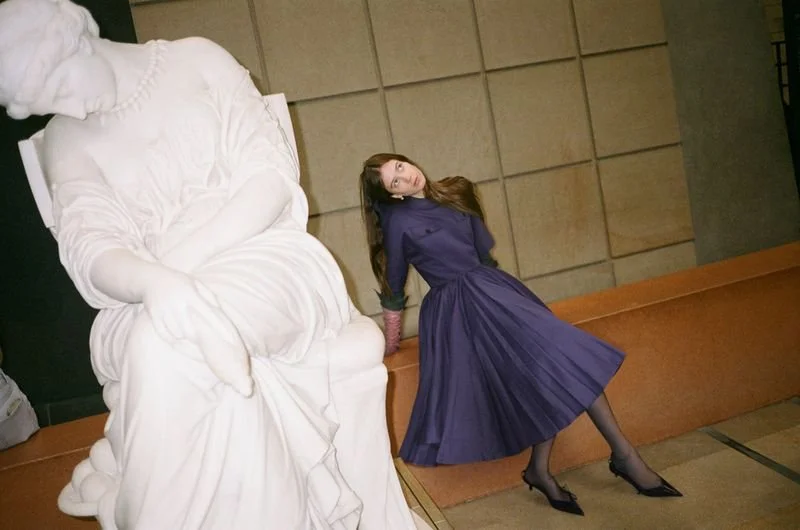
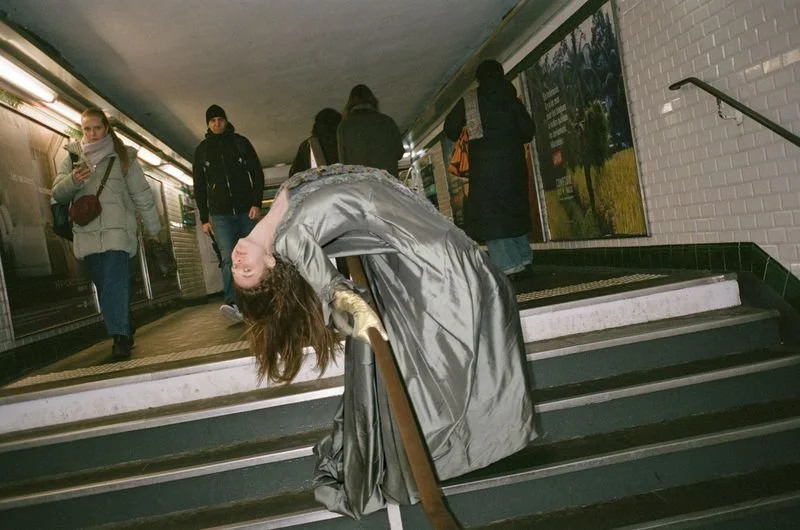
'A Sunday Afternoon' editorial by Oliver Hadlee Pearch for Middle Plane Magazine.
Photographer | Oliver Hadlee Pearch
Stylist | Danny Reed
Model | Sunday Rose
Hair stylist |
Makeup artist |
Casting | Rachel Chandler
Quisque iaculis facilisis lacinia. Mauris euismod pellentesque tellus sit amet mollis.